Choosing a consumer goods company is not just about salary or brand name. It is about how company size, location, and product fit shape your daily work, career speed, and long-term satisfaction in ways many graduates overlook.
When people compare job offers in consumer goods, they often focus on surface-level factors like compensation or company reputation. But once you actually start working, those things matter less than structure—how the company is organized, where it is located, and what kinds of products you will spend years working on.
I’ve noticed that early career decisions in this industry are less about picking the “best” company and more about picking the right environment for how you want to grow. Two people can join equally strong companies and have completely different experiences just because their roles, product categories, or locations shape their daily reality differently.
Takeaways
- Company size changes your career speed: large firms offer structure and training, smaller firms offer faster responsibility.
- Location matters more than expected because many CPG companies are concentrated in specific U.S. regions like the Midwest.
- Product fit strongly influences motivation and long-term job satisfaction.
- Industry pressure from retailers and consolidation shapes how companies behave internally and externally.
How Company Size Impacts Your Career
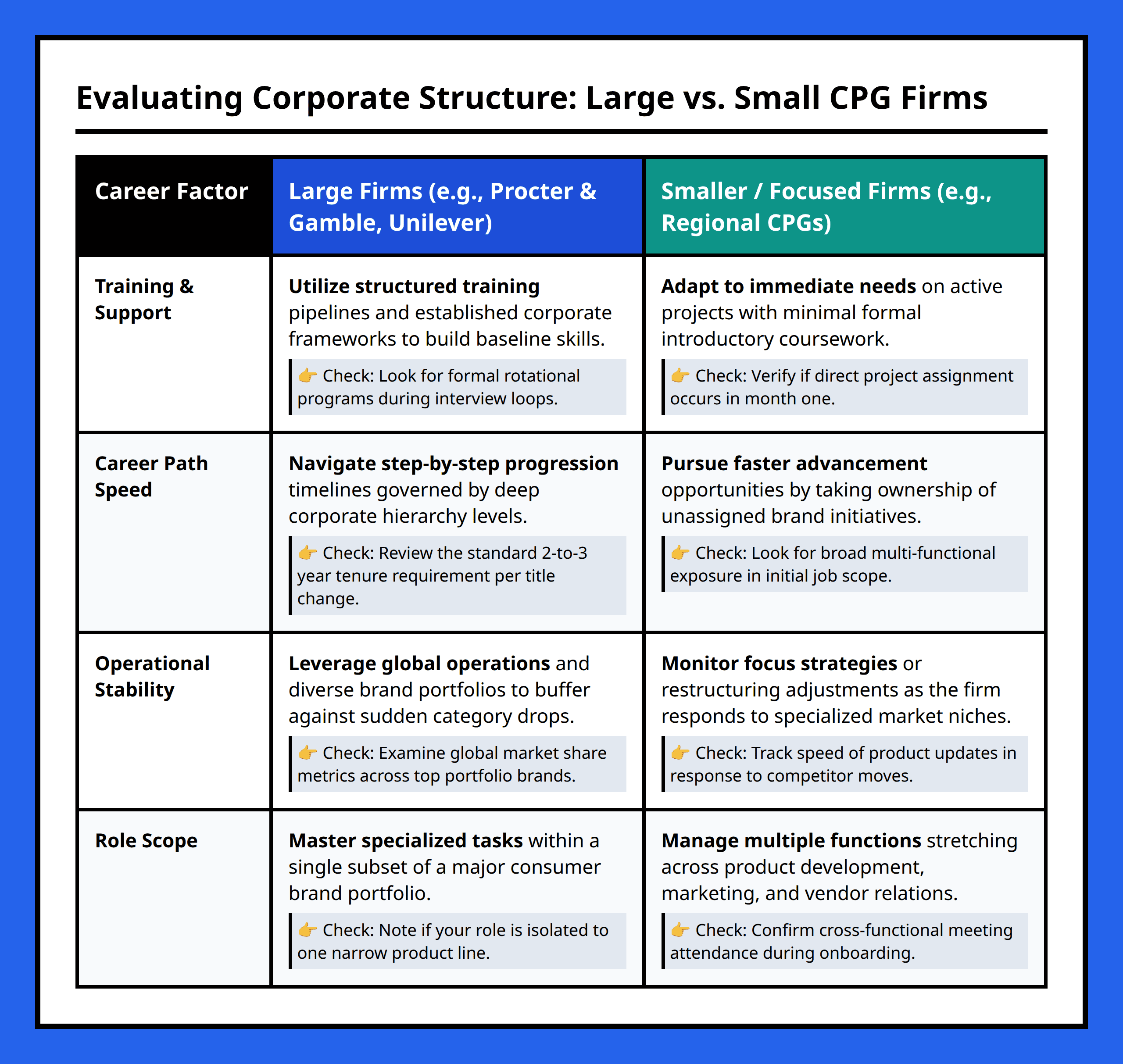
One of the first decisions when choosing a consumer goods company is understanding how company size affects your role. Large corporations and smaller firms operate in very different ways, and that difference directly shapes your learning curve and career speed.
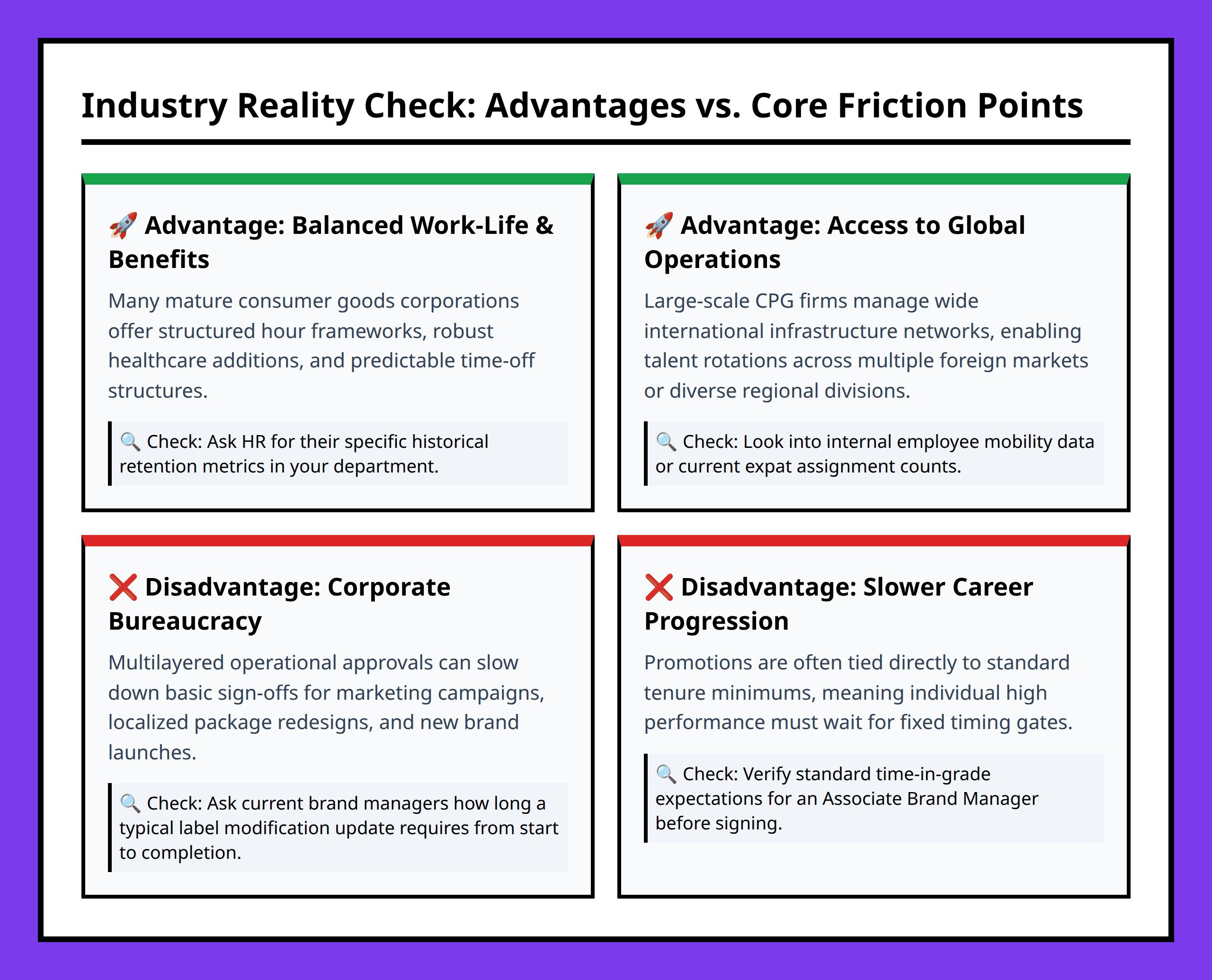
Large companies such as Procter & Gamble or Unilever typically offer structured training systems, clear job roles, and strong internal development programs. This structure is helpful if you are new to the industry because it reduces uncertainty and gives you a clear path for learning how the business works.
However, structure also comes with trade-offs. In large organizations, decision-making can be slow, and roles can feel narrowly defined. You may spend more time coordinating with different teams before seeing the impact of your work, which can slow down early career visibility.
Smaller companies or more focused divisions—such as regional brands or specialized product companies—often move faster. You may be asked to take on broader responsibilities earlier, from analyzing sales data to helping shape product launches. This can accelerate learning, but it also means less formal training and fewer safety nets.
For example, a junior brand associate at a large multinational might spend their first year supporting established campaigns, while someone at a smaller consumer brand might help launch a new product within months. Both paths are valuable, but they create very different early-career experiences.
Location and Lifestyle Considerations
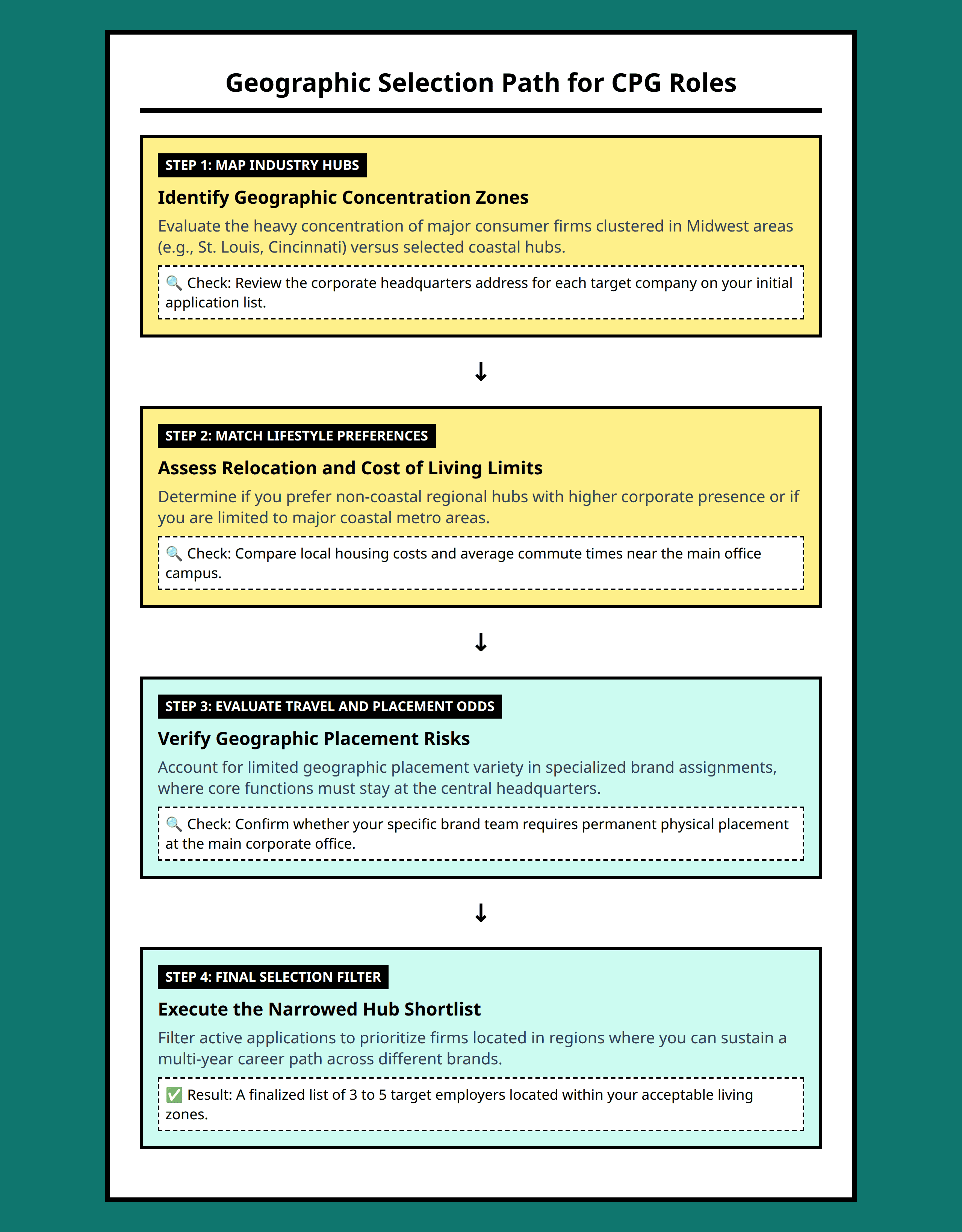
Location is often underestimated when choosing a consumer goods company, but it has a strong influence on lifestyle, networking opportunities, and even long-term career direction.
Many major consumer goods companies are concentrated in specific regions, especially the Midwest. Cities like St. Louis have historically served as hubs for large corporations such as Procter & Gamble, Unilever, and other legacy consumer brands. This concentration creates strong industry networks but also limits geographic diversity in job placement.
In contrast, coastal cities may offer fewer headquarters but more exposure to marketing agencies, startups, and digital-first companies. This can shape the type of experience you gain, especially if you are interested in modern marketing or tech-driven consumer brands.
There is also a lifestyle difference. Midwest-based roles often come with more predictable work environments, while coastal roles may offer faster-paced but less structured experiences. Neither is better universally—it depends on how you prefer to work and live.
For example, a candidate choosing between a role in St. Louis and one in New York might face a decision between structured corporate training and a more dynamic, fast-moving marketing environment. The job title might look similar on paper, but the daily experience can be completely different.
Product Fit and Career Satisfaction

Product fit is one of the most personal but important factors in choosing a consumer goods company. Simply put, the more connected you feel to the products you work on, the more motivated you are likely to stay over time.
Working on familiar everyday products—such as snacks, beverages, or household goods—can make the job feel more meaningful because you see your work reflected in real consumer behavior. On the other hand, working in a category you find uninteresting can make even a strong role feel disconnected.
Large companies like Clorox, Sara Lee, or Procter & Gamble often manage multiple product categories. This means you may have the opportunity to rotate across different brands, from cleaning products to food items, depending on your role and career stage.
Product preference also influences performance. When employees feel connected to what they are building or selling, they tend to engage more deeply in problem-solving, marketing strategy, and customer understanding.
For example, someone who enjoys food innovation might thrive in a snack or beverage division, while someone interested in sustainability might prefer household or cleaning product categories. These preferences often matter more over time than initial job title or compensation.
Industry Pressure: Retailers and the “Wal-Mart Effect”
Another important factor shaping consumer goods companies is external pressure from large retailers. One of the most influential forces is often referred to as the “Wal-Mart effect,” where large retail chains gain significant bargaining power over manufacturers.
This pressure affects pricing, product placement, and even long-term strategy. When a single retailer controls a large share of distribution, consumer goods companies must adapt their operations to meet strict cost and supply requirements.
This environment also influences internal career decisions. Employees working in sales, marketing, or supply chain roles must understand not just product strategy, but also retailer relationships and negotiation dynamics.
For example, a brand manager might not only design a marketing campaign but also adjust packaging or pricing to meet retailer requirements for shelf space or promotional placement.
Corporate Strategy and Restructuring in CPG Companies
Large consumer goods companies often go through restructuring cycles to stay competitive. Firms like Procter & Gamble, Unilever, Clorox, and Sara Lee have all adjusted their portfolios over time by focusing on specific product categories and simplifying operations.
These restructuring efforts are often driven by the need to improve efficiency, respond to retail pressure, or sharpen brand focus. Companies may exit certain categories while doubling down on core brands that generate stable demand.
For employees, this means that job roles can evolve quickly. A team working on one product category today may find themselves reassigned or reorganized if the company shifts strategic direction.
Understanding this reality helps job seekers set realistic expectations about stability and change within the industry. Consumer goods companies may appear stable from the outside, but internally they are constantly adjusting to market pressures and competition.
How to Evaluate the Right Fit for You
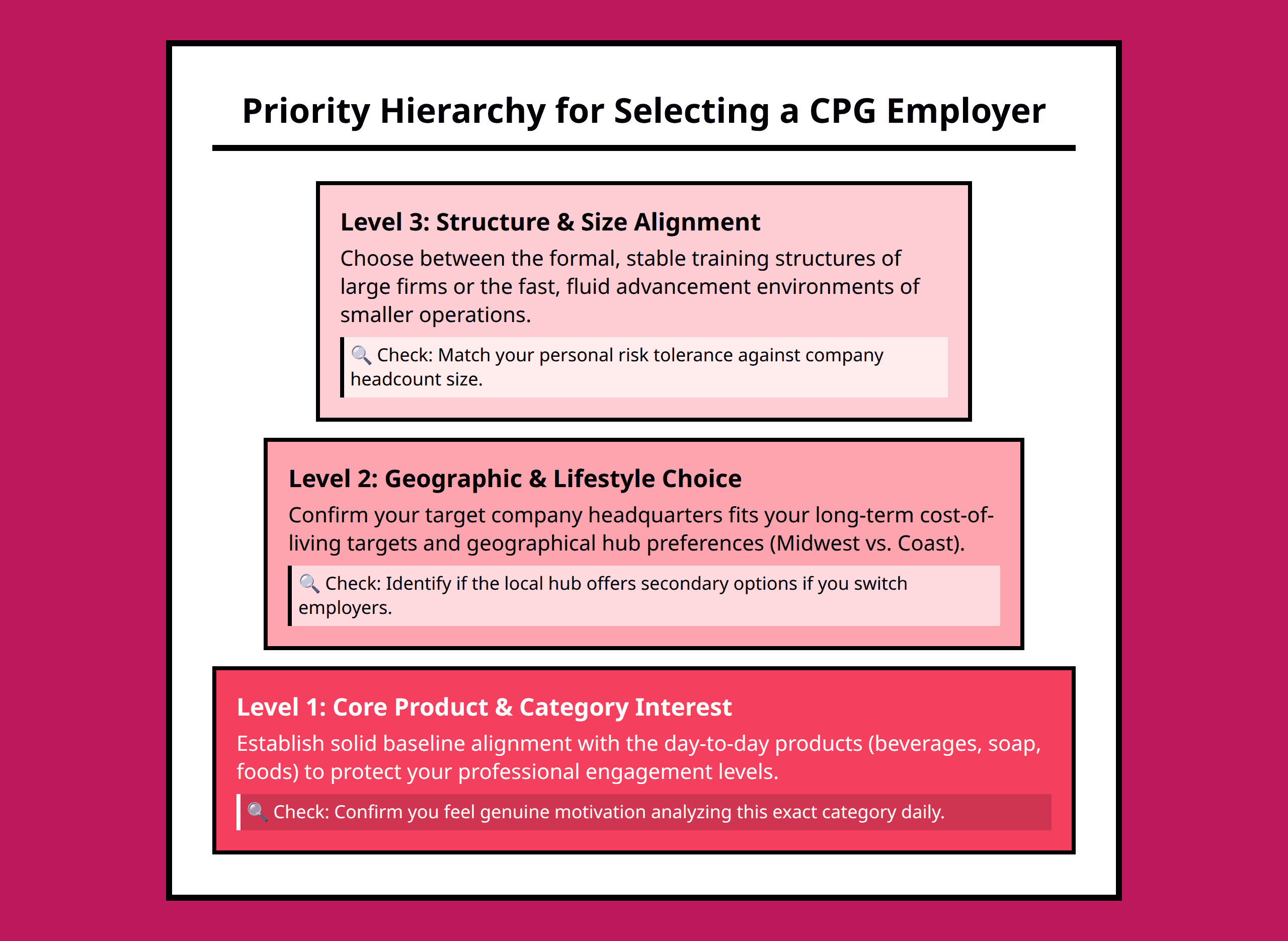
Choosing the right consumer goods company is not about finding a perfect organization. It is about matching your preferences with the structure of the company you join.
If you prefer structured learning and long-term stability, large multinational companies may be a better fit. If you want faster responsibility and broader exposure, smaller or more focused companies may suit you better.
If location matters to your lifestyle, you should carefully evaluate where the company is headquartered and how much mobility the role requires. And if motivation is a key concern, product alignment should not be ignored.
The most successful early careers in this industry usually come from people who understand these trade-offs early and choose intentionally rather than reactively.
FAQ
- Consumer Packaged Goods (CPG): Everyday products that are used frequently and replaced regularly, such as food, beverages, and household items.
- Brand Management: A role responsible for overseeing marketing, strategy, and performance of a specific product or brand.
- Retail Consolidation: The increasing power of large retailers over suppliers, influencing pricing and product decisions.
- Product Fit: The alignment between an employee’s interests and the product category they work on.
- Corporate Restructuring: A company reorganizing its operations, product lines, or strategy to improve performance or focus.
References:
- https://business.bankofamerica.com/en/resources/how-to-choose-an-ideal-business-location
- https://www.eposnow.com/us/resources/business-location/
- https://unwrittenbusinessguide.substack.com/p/s-m-or-l-picking-the-right-company
- https://www.csgtalent.com/insights/blog/what-size-of-company-is-the-right-fit-for-you/
- https://www.deloitte.com/us/en/insights/industry/retail-distribution/consumer-behavior-trends-state-of-the-consumer-tracker/understanding-value-seeking-consumer.html
- https://www.sba.gov/business-guide/plan-your-business/market-research-competitive-analysis
- https://datappeal.io/find-the-right-business-location-7-key-factors-for-successful-site-selection/
- https://www.accruent.com/resources/knowledge-hub/retail-site-selection
- https://passby.com/blog/site-selection-criteria/
- https://www.bluecapeconomicadvisors.com/post/7-location-factors-for-manufacturing
- https://squareup.com/au/en/business-launchpad/research/find-a-business-location
