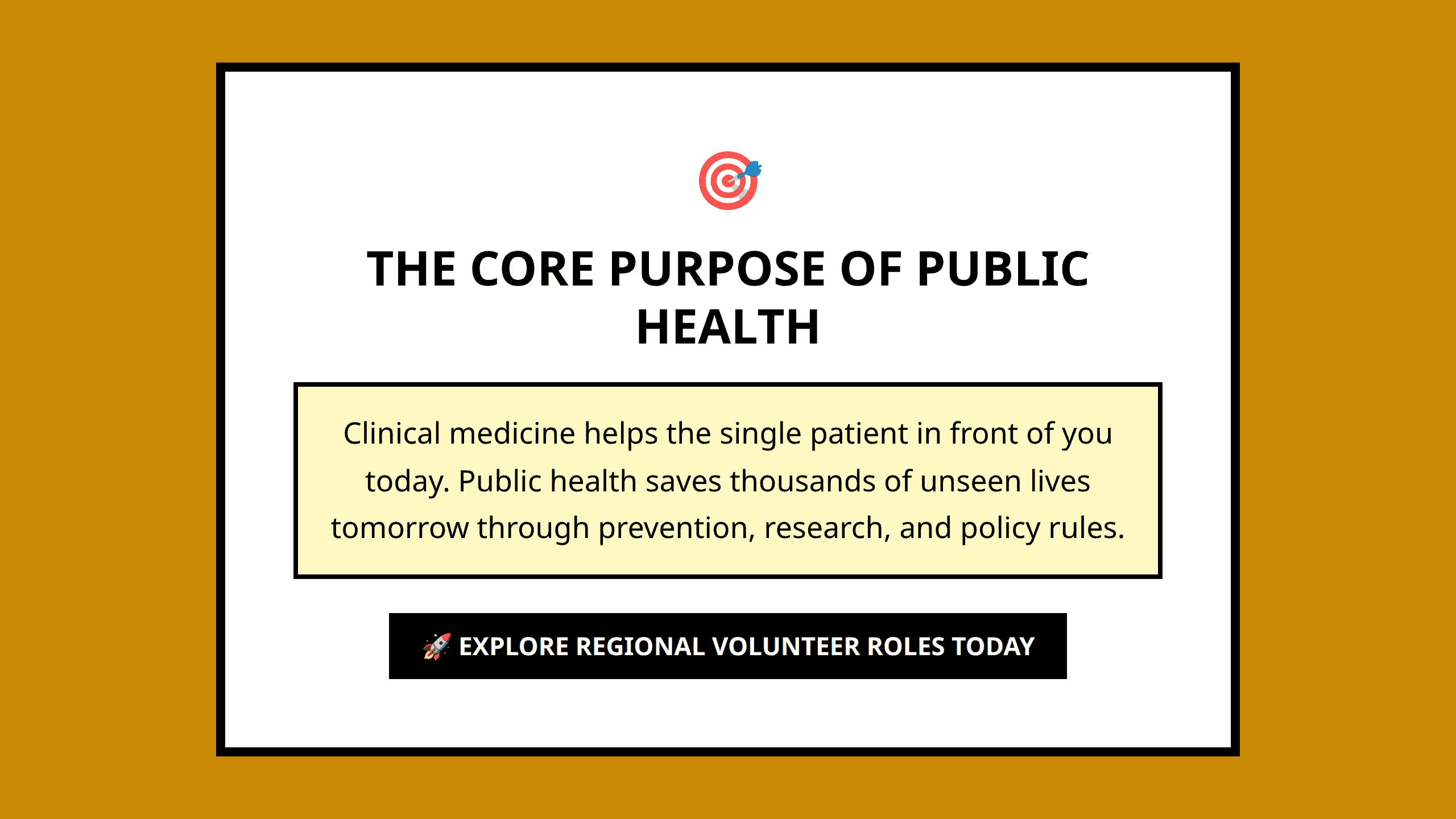
Public health careers focus on improving the health of entire communities through prevention, policy, research, and education rather than individual patient treatment. These careers include everything from outbreak investigation and environmental safety to health communication and policy development, creating a wide ecosystem of roles across society.
When most people think about health careers, they picture hospitals, doctors, and direct patient care. That view is understandable—but incomplete. There is a whole parallel world of work focused not on treating illness after it happens, but on preventing it in the first place.
What stands out most about public health careers is how broad they really are. The field stretches across infectious disease control, chronic disease prevention, environmental protection, workplace safety, and even law and policy. Once you see the structure, it becomes easier to understand where different jobs fit and how they connect to each other.
Takeaways
- Public health careers focus on populations, not individual patients.
- The field includes prevention, policy, environmental safety, and health education roles.
- Many jobs operate behind the scenes but directly shape community health outcomes.
- Career paths are highly flexible and often cross disciplines like science, law, and communication.
What Public Health Professionals Actually Do
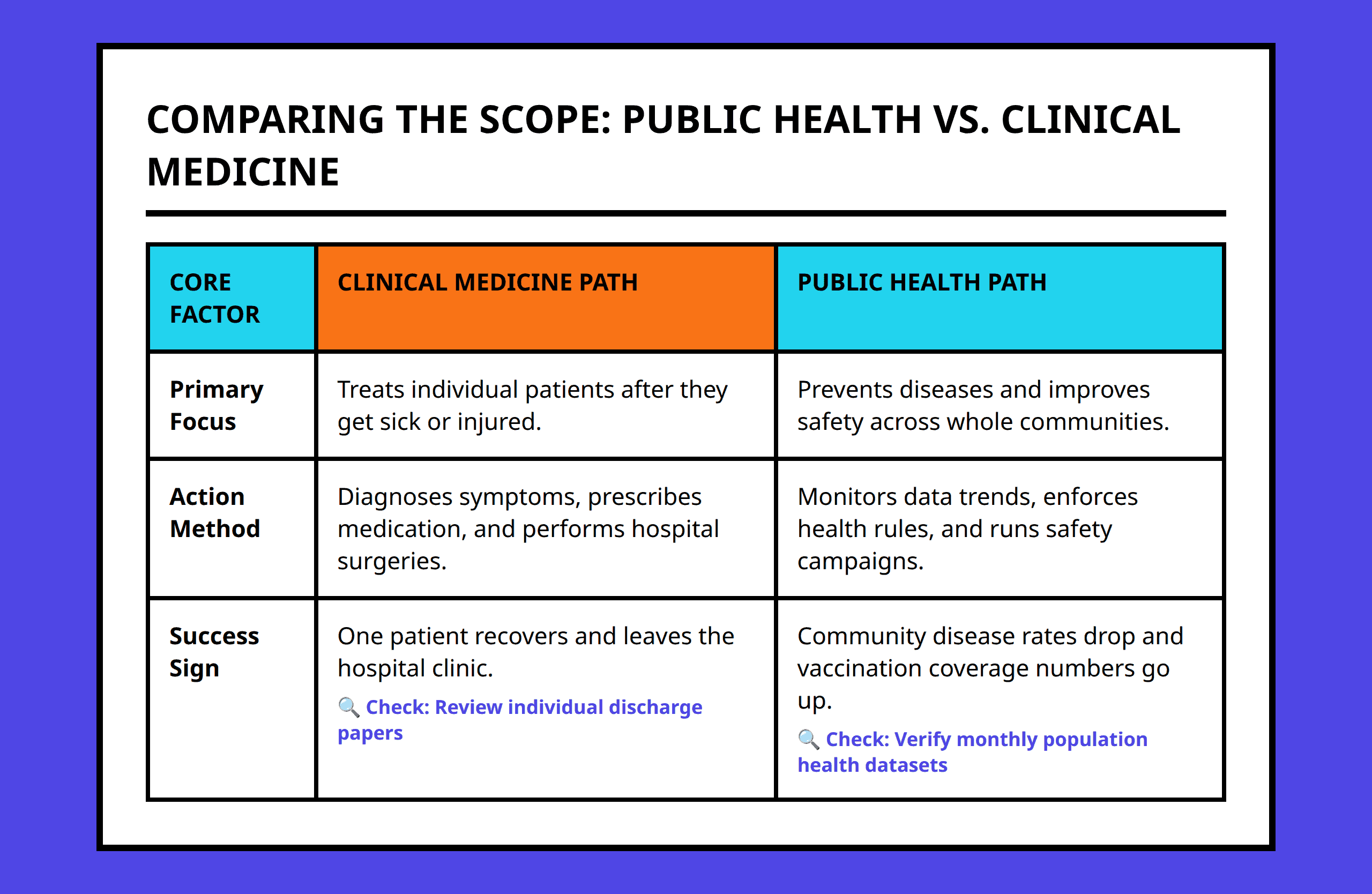
Public health professionals work to improve health outcomes at the population level. Instead of focusing on one patient at a time, they look at patterns, systems, and community-wide risks. Their work often begins before illness spreads, rather than after it appears.
A core function of public health is monitoring health conditions in communities. For example, doctors and laboratories may report certain contagious diseases so health agencies can track patterns. If there is a sudden increase in cases in one area, public health teams investigate quickly to understand the cause and prevent further spread.
Another major responsibility is prevention. This can include vaccination programs, sanitation improvements, and public education campaigns that encourage healthier behavior. For instance, promoting safe food handling or encouraging exercise can reduce long-term disease risk across entire populations.
Public health professionals also respond to health threats when they emerge. This can include disease outbreaks, environmental hazards, or injury-related trends. Their goal is not just to respond, but to reduce future risk through better systems and planning.
A simple example is a public health nurse working in a community clinic. Instead of only treating illness, they might also track vaccination coverage in children and help identify neighborhoods with lower access to care, then work with local programs to address gaps.
Major Public Health Career Categories
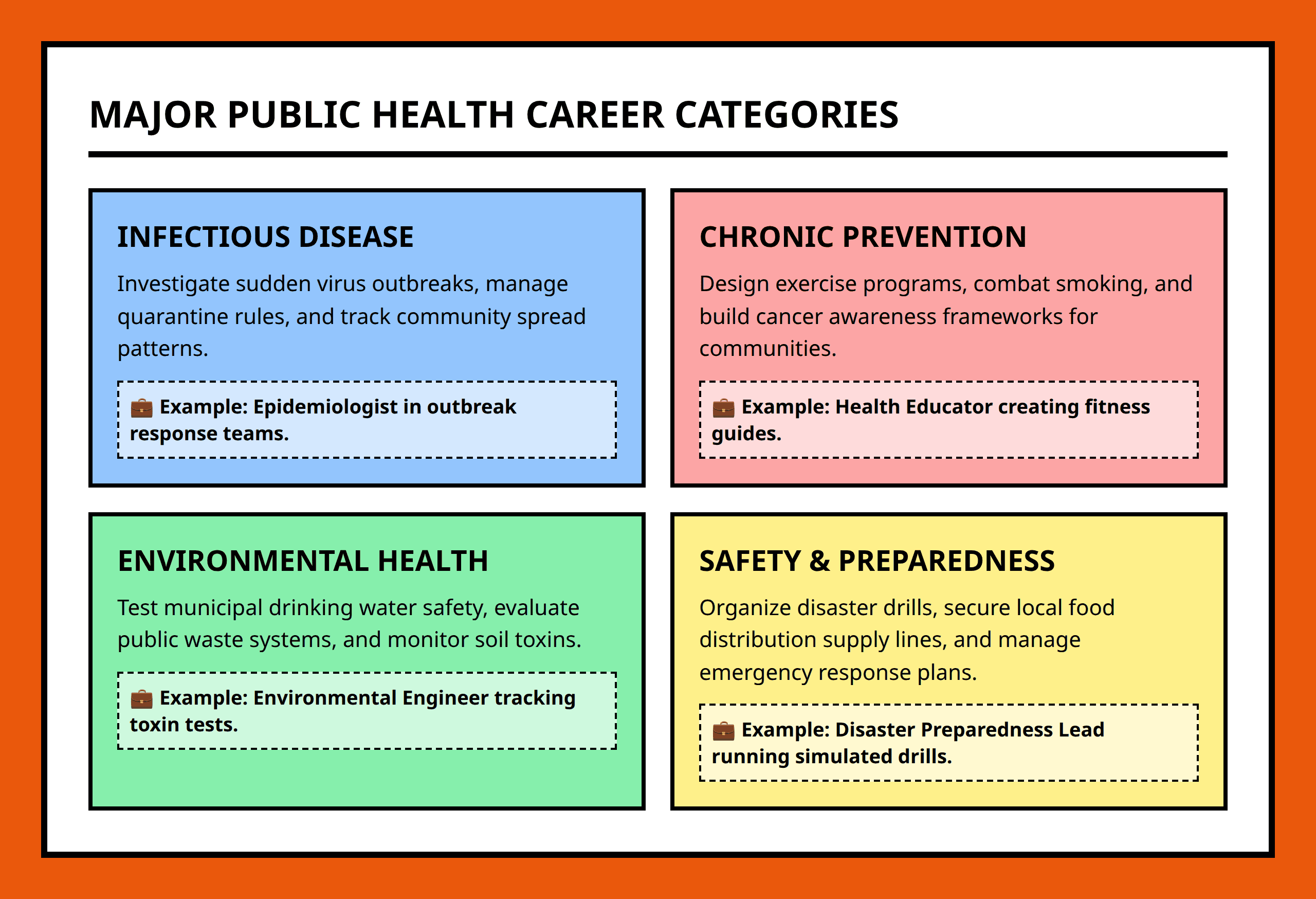
Public health careers are grouped into several major areas, each focused on a different type of health challenge. These categories help organize the wide variety of roles in the field.
Infectious Disease and Epidemiology
This area focuses on tracking and controlling diseases that spread between people. An epidemiologist studies how diseases occur in populations and looks for patterns in outbreaks. Their work often involves investigating where an infection started and how it is spreading.
For example, during a foodborne illness outbreak, an epidemiologist might analyze patient reports, identify a contaminated food source, and help prevent additional cases.
Chronic Disease and Health Promotion
These roles focus on long-term conditions like diabetes, heart disease, and cancer. Health educators and program coordinators design campaigns to encourage healthier lifestyles and reduce risk factors such as smoking or poor nutrition.
A health promotion program coordinator might work on a citywide initiative to reduce tobacco use by combining education campaigns, community workshops, and support services for quitting smoking.
Environmental and Occupational Health
Environmental health professionals protect people from hazards in air, water, and workplaces. Environmental engineers and toxicologists often work to ensure that communities have safe drinking water and reduced exposure to harmful substances.
An environmental engineer, for instance, may evaluate water systems to ensure they meet safety standards and help design infrastructure that reduces contamination risk.
Food Safety and Public Safety
This area ensures that food, workplaces, and public environments are safe. Food inspectors, safety officers, and public safety professionals monitor compliance with health regulations and respond to hazards.
A food safety inspector may visit restaurants to check sanitation practices and ensure proper food storage conditions to prevent contamination.
Mental Health and Social Support
Public health also includes mental health services and support for vulnerable populations. Social workers and behavioral health coordinators help connect individuals with resources and support systems that improve overall wellbeing.
Policy, Law, and Administration
Policy analysts and public health administrators shape the rules and systems that guide public health efforts. This includes developing regulations, evaluating programs, and ensuring health services are accessible.
A policy analyst might evaluate how a new regulation affects access to healthcare services and recommend improvements based on community impact.
Core Functions That Shape All Public Health Work
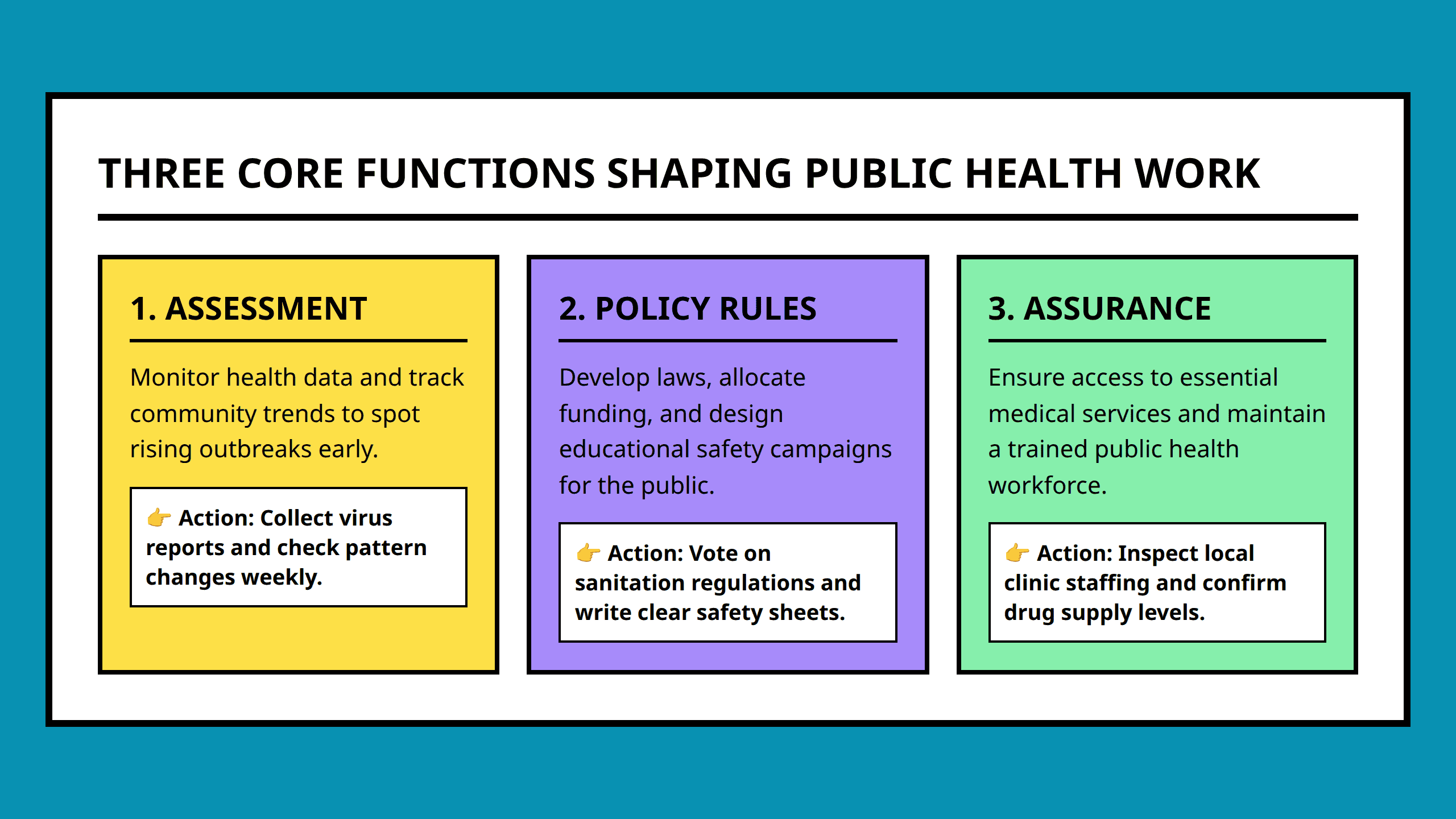
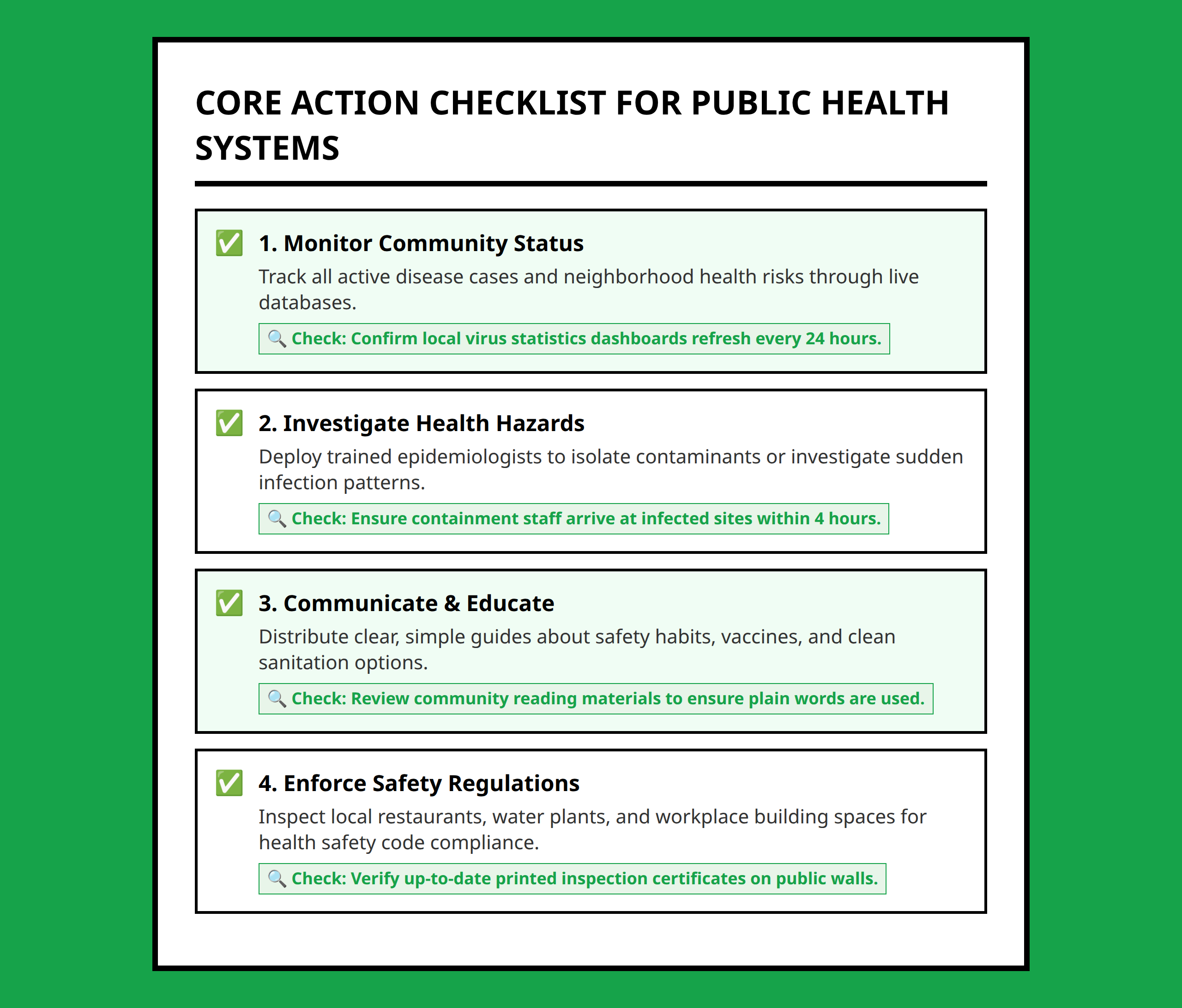
All public health careers are built on a shared foundation of core functions and essential services. These functions define how health systems operate at the population level.
One key framework includes monitoring health status, diagnosing and investigating problems, informing and educating the public, and mobilizing community partnerships. These steps ensure that health risks are identified early and addressed effectively.
Another important function is developing policies and enforcing laws that protect public safety. For example, regulations on water quality, food safety, and workplace safety all fall under this category.
Public health systems also focus on ensuring access to services. This means connecting people to care when needed and making sure essential services are available in underserved communities.
Evaluation is also critical. Public health professionals regularly assess whether programs are working effectively and whether resources are being used efficiently.
A widely used structure for this work includes ten essential public health services such as monitoring community health, educating the public, enforcing health laws, and evaluating system performance. These services act as a shared blueprint for all public health roles.
Where Public Health Careers Are Found
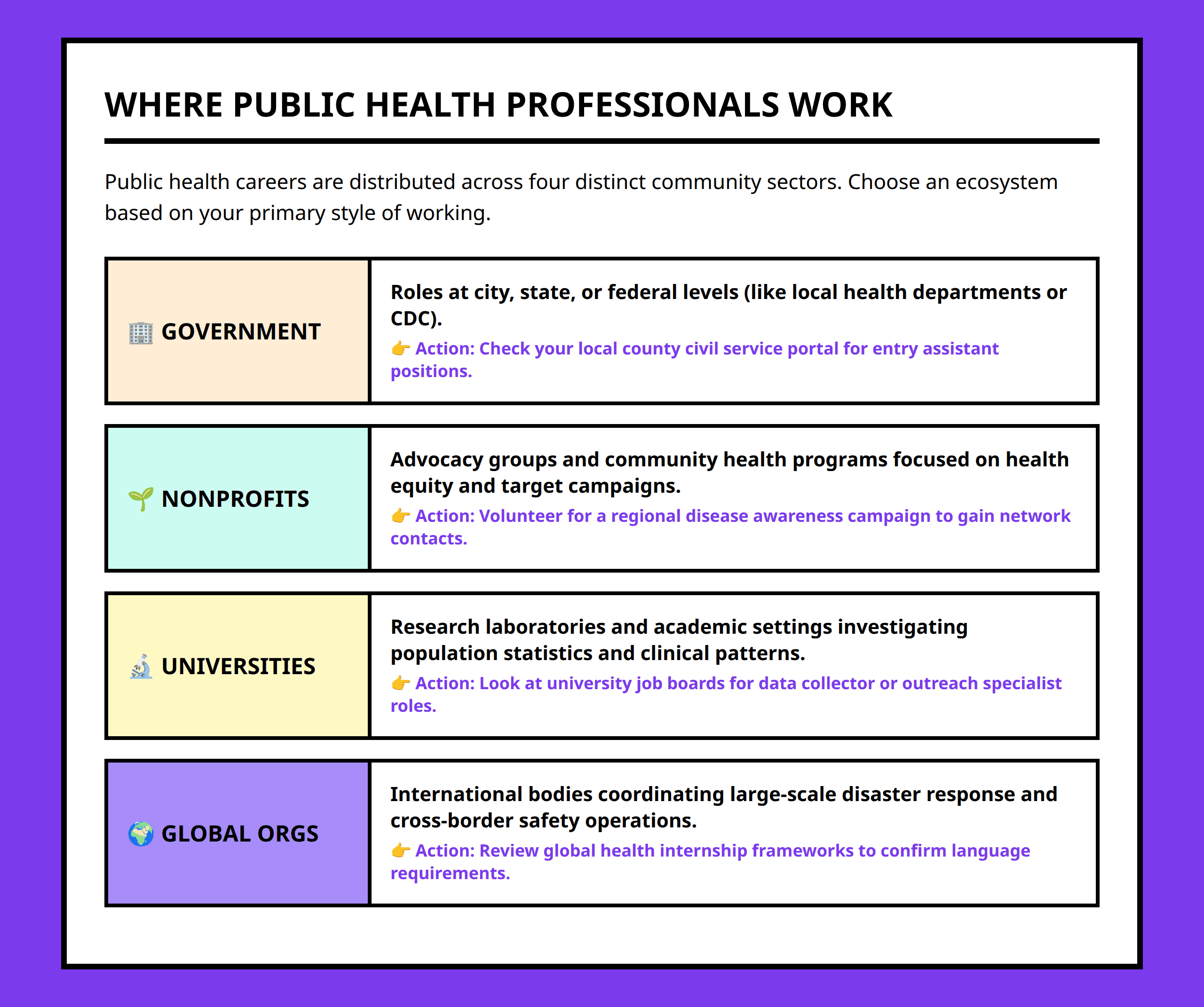
Public health professionals work across a wide range of organizations. Government agencies are one of the largest employers, including local health departments, state agencies, and federal organizations that coordinate national health programs.
For example, a local health department may run vaccination campaigns, while federal agencies may coordinate disease surveillance systems or emergency response efforts across states.
Nonprofit organizations also play a major role. These groups often focus on community outreach, health education, and advocacy for underserved populations. Their work may include designing public awareness campaigns or delivering direct support services.
Research institutions and universities contribute by studying health trends and evaluating programs. They help generate evidence that guides public health decisions and policy development.
Global organizations and community programs extend this work internationally, focusing on issues like disease prevention, clean water access, and emergency response in different parts of the world.
FAQ
- Epidemiology: The study of how diseases spread and affect populations, used to identify patterns and control outbreaks.
- Environmental health: A field focused on how air, water, and environmental conditions impact human health and safety.
- Health promotion: Efforts aimed at encouraging healthier behaviors and preventing disease before it occurs.
- Policy analyst: A professional who evaluates and develops health-related policies to improve system performance and outcomes.
- Public health nurse: A nurse who works at the community level to prevent disease and promote health rather than only treating individual patients.
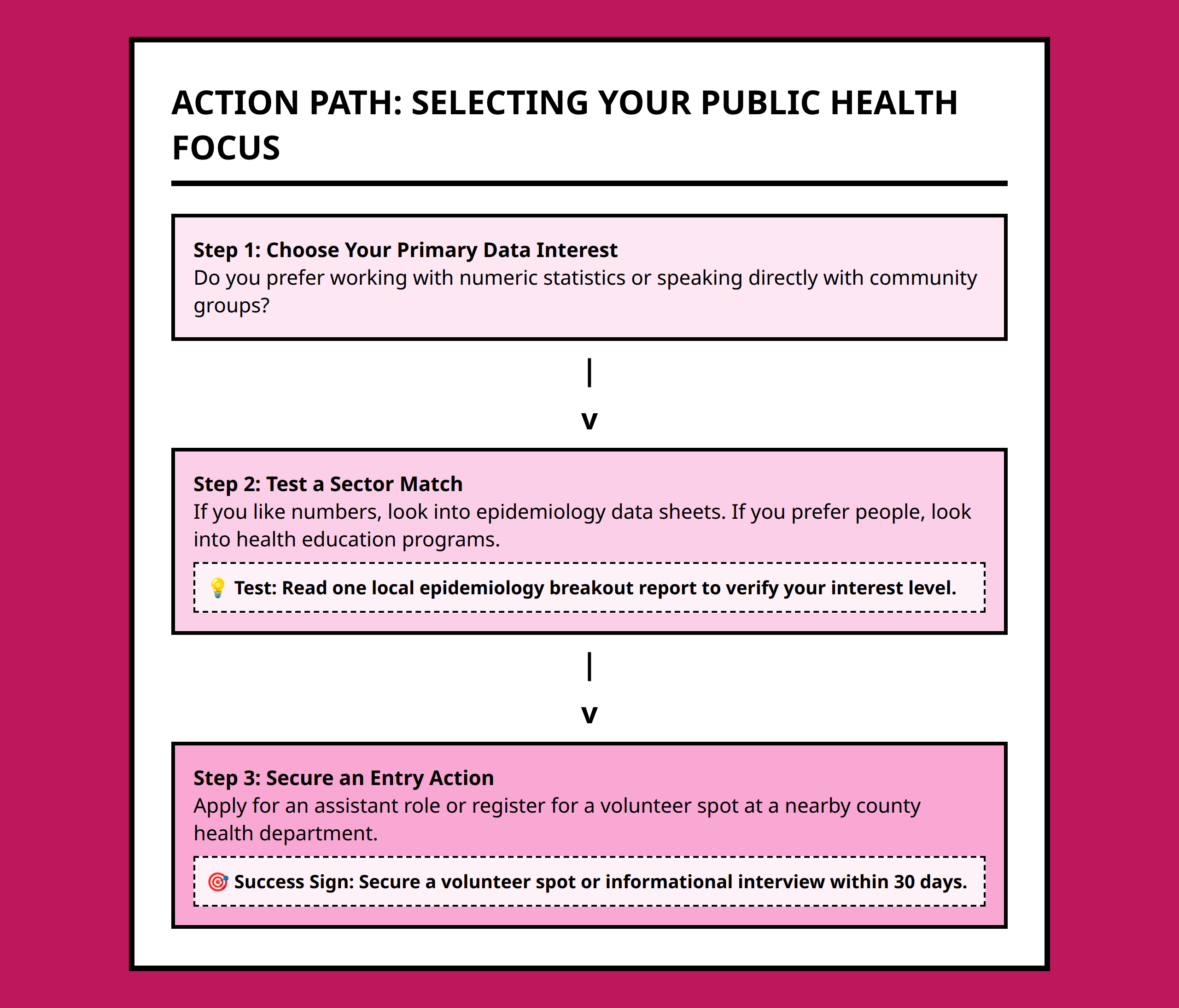
One practical next step is to look at your local health department or nonprofit organizations and identify one program related to prevention or education, then observe how it connects to one of the public health career categories above.
References:
- https://www.youtube.com/shorts/gVO7Yv1eTTw
- https://www.youtube.com/watch?v=SOr2rRjGNdQ
- https://www.youtube.com/watch?v=FvN1rfxYKIo
- https://health.uconn.edu/public-health-sciences/bridge-to-public-health-careers/public-health-careers/
- https://www.pit.edu/news/an-overview-of-public-health-career-options/
- https://www.publichealthonline.org/careers/
- https://www.baypath.edu/news/bay-path-university-blogs/post/the-value-of-public-health-mph-careers-that-matter/
- https://www.publichealthdegrees.org/careers/
- https://www.cdc.gov/stem/php/college-and-professional/see-yourself-in-a-public-health-career.html
- https://insider.augusta.edu/12-public-health-career-paths/
- https://minnstate.pressbooks.pub/hgantunez2/chapter/chapter-6-careers-in-public-health/
