Personal marketing gives job seekers a practical way to explain their value to employers. By applying the four marketing principles—Product, Place, Promotion, and Price—you can build a clearer job search strategy and present yourself more effectively throughout the hiring process.
Many people know they have useful skills, but struggle when asked a simple question: “Why should we hire you?” The problem is often not a lack of ability. It is a lack of structure for explaining that ability.
I find the Four Ps framework useful because it turns a vague idea like “selling yourself” into something concrete. Instead of guessing how to approach a job search, you can evaluate yourself using the same principles used to market a product successfully.
Takeaways
- Understand your strengths and limitations before trying to market yourself.
- Choose target employers and locations intentionally rather than applying everywhere.
- Your resume, portfolio, networking, and interviews all work together as promotion tools.
- Salary expectations should be based on qualifications, experience, and market realities.
- Consistent personal branding helps employers remember what makes you valuable.
Product: Understanding What You Offer
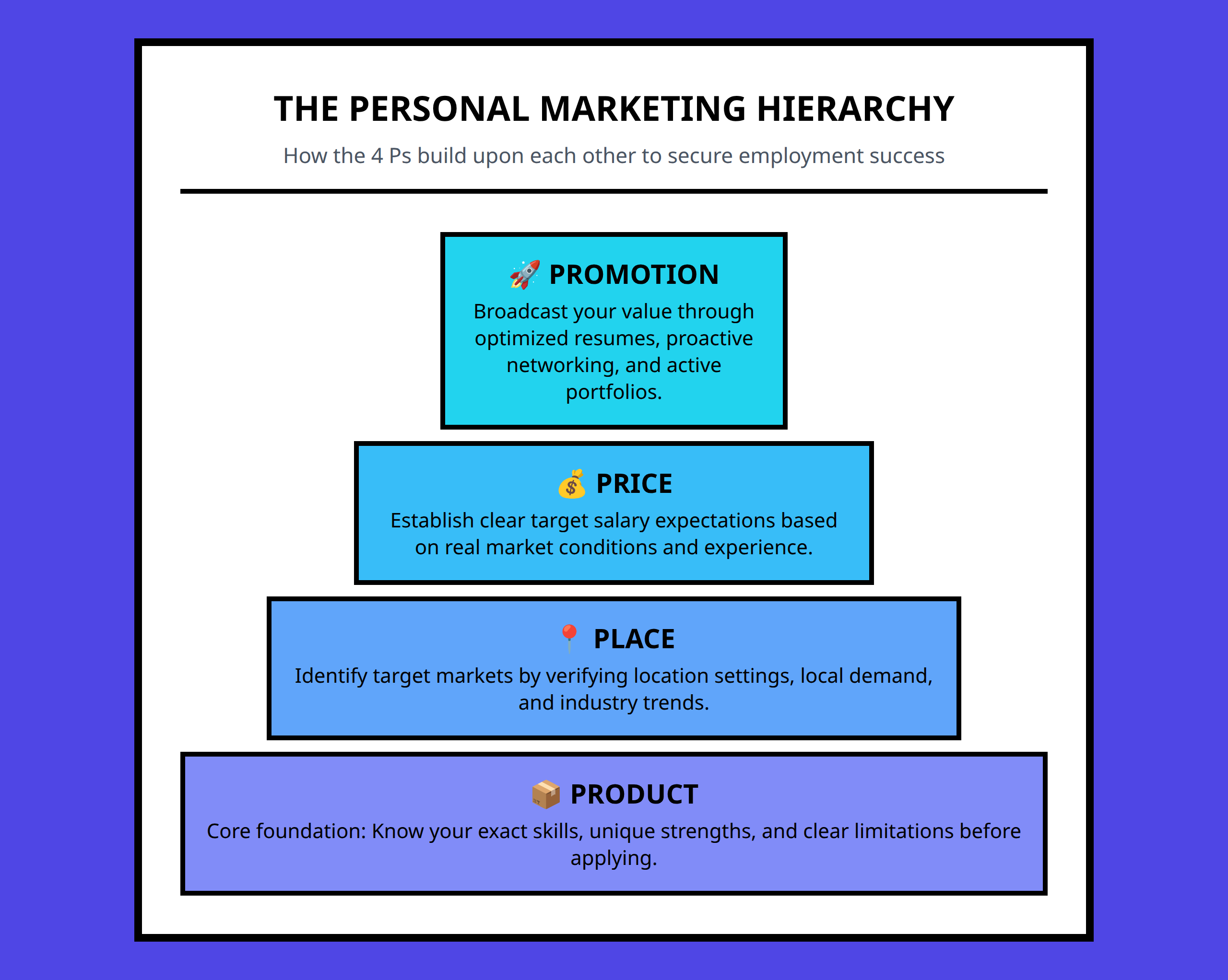
The first step in personal marketing is understanding the product—and in this case, the product is you.
Before employers can recognize your value, you need to understand it yourself. This means identifying your skills, abilities, knowledge, personal strengths, and even areas where you still need development.
A useful question to ask is: What benefits would an employer receive by hiring me?
Many job seekers focus only on job titles or education credentials. Those things matter, but employers are often interested in the practical value behind them. Can you solve problems? Work well with others? Adapt quickly? Communicate clearly?
For example, two people may have similar educational backgrounds. One can clearly explain how they organize projects, work with teams, and solve challenges. The other simply lists qualifications. The first person is usually easier for an employer to evaluate.
Self-assessment is important because strong personal marketing begins with accurate self-knowledge. If you do not understand your own strengths, it becomes difficult to communicate them to anyone else.
Place: Finding the Right Market for Your Skills

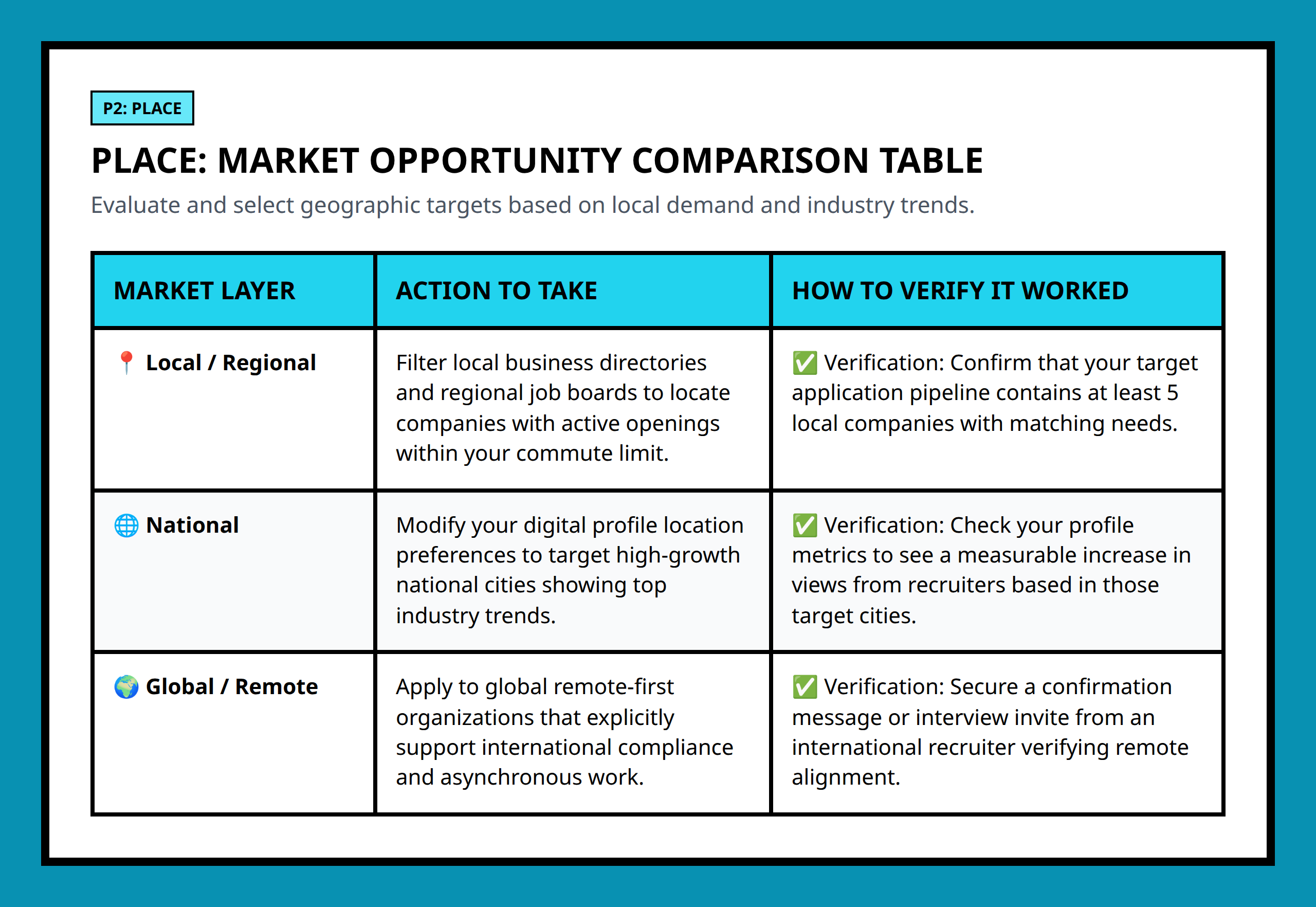
The second principle focuses on where you intend to market yourself.
Not every opportunity exists in every location, industry, or type of organization. Effective job seekers think carefully about where their potential employers are most likely to be found.
Place includes several considerations:
- Local, regional, national, or global opportunities
- Preferred industries
- Small versus large organizations
- Office-based or outdoor work environments
- Geographic mobility and relocation preferences
One practical mistake is limiting your search too early without understanding the consequences. A narrower geographic focus may reduce available opportunities, while a broader search can increase options.
| Market Choice | Potential Advantage |
|---|---|
| Local Market | Familiarity and convenience |
| Regional Market | More opportunities while remaining relatively close |
| National Market | Broader career options and employer choices |
| Global Market | Maximum opportunity range and industry exposure |
Beyond location, think about workplace fit. Some people perform best in large organizations with structured systems. Others thrive in smaller environments where responsibilities are broader and more flexible.
Promotion: Making Your Value Visible
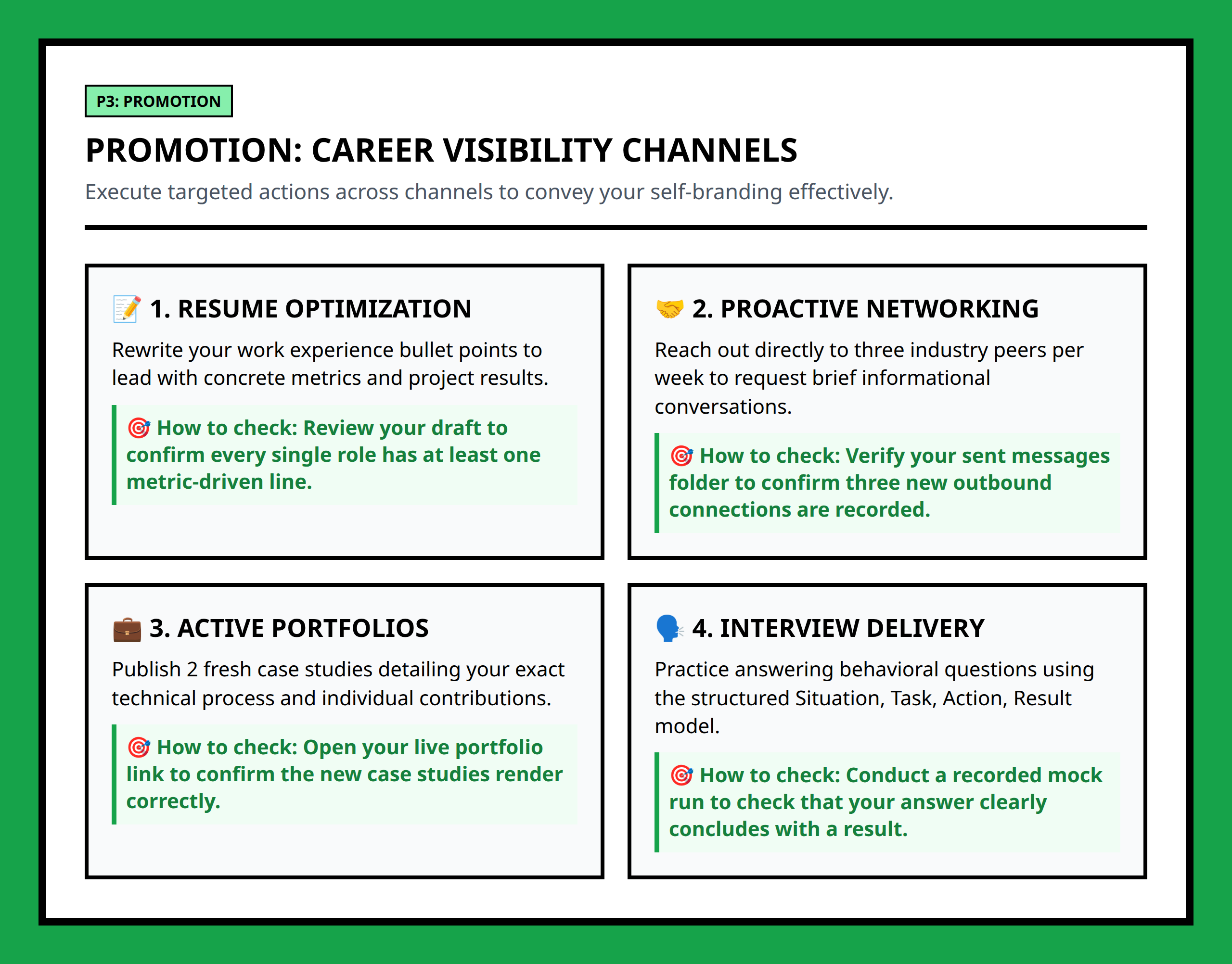
Promotion answers an important question: How will employers learn about you?
Even highly qualified candidates can struggle if they fail to communicate their strengths effectively.
Your promotional tools may include:
- Resume
- Cover letter
- Professional portfolio
- Networking activities
- Interview performance
The interview is often the most important promotional opportunity because it allows employers to evaluate both your qualifications and your presentation.
Presentation goes beyond what you say. Professional appearance, preparation, communication style, confidence, and organization all contribute to the impression you create.
Personal branding also plays a role. A strong personal brand simply means being clear and consistent about what makes you valuable. If your strength is analytical problem-solving, that message should appear consistently across your resume, portfolio, networking conversations, and interview answers.
When different parts of your job search communicate different messages, employers may become uncertain about your fit. Consistency creates credibility.
Price: Positioning Salary Expectations Realistically
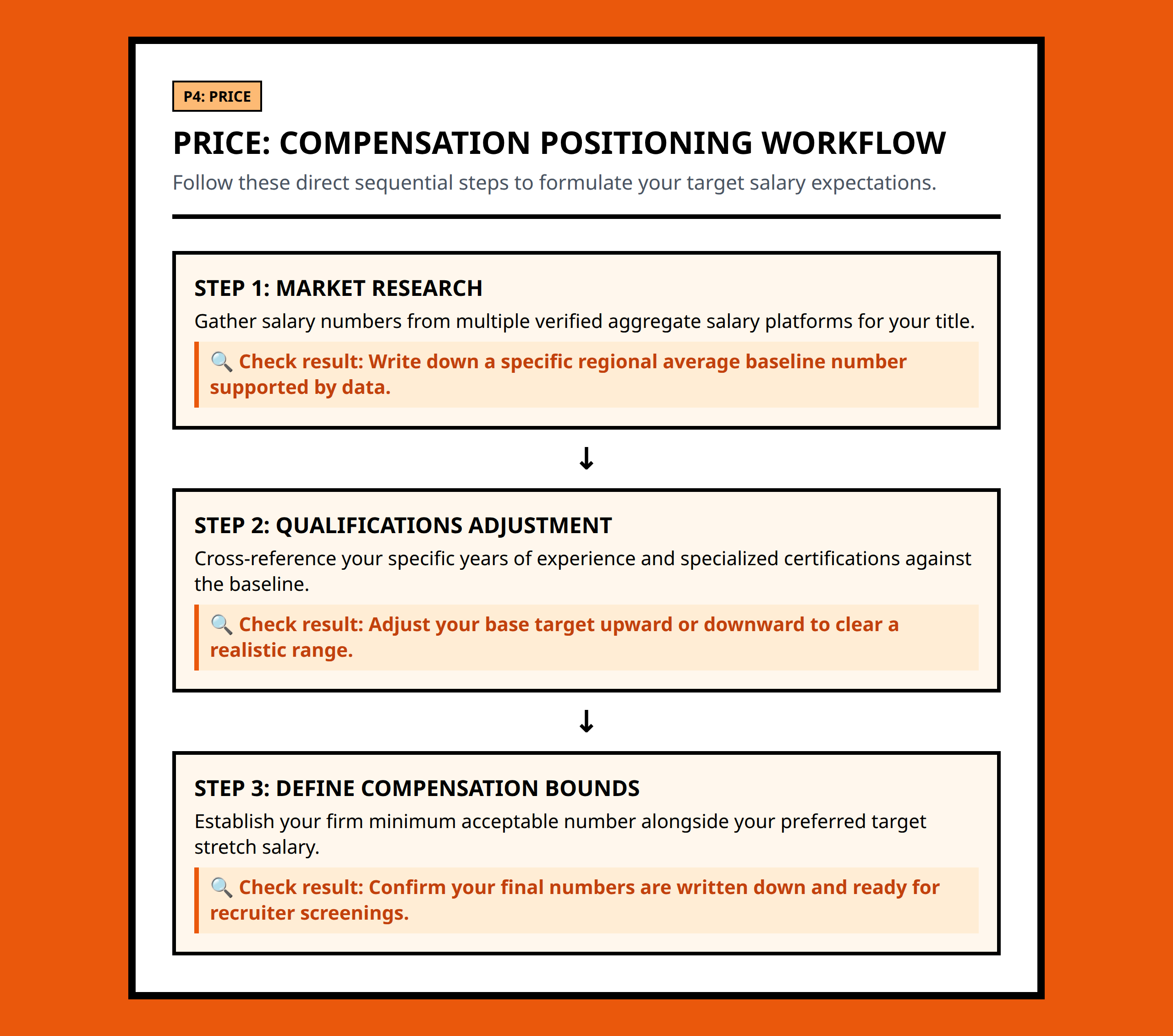
The final P focuses on compensation.
Most job seekers want to earn as much as possible, while employers want strong value for their investment. Successful salary discussions require preparation rather than guesswork.
Several factors influence salary expectations:
- Education and training
- Experience level
- Previous responsibilities
- Geographic location
- Market conditions
For newer graduates, determining an appropriate salary range may require researching what individuals with similar qualifications typically earn. Experienced professionals often have additional reference points based on previous compensation and responsibilities.
The goal is not simply to request the highest possible number. The goal is to establish a realistic range that reflects your qualifications and the market in which you are competing.
Good salary positioning supports the overall marketing strategy. If your expectations are disconnected from your experience or market conditions, negotiations become more difficult.
Why the Four Ps Work Together
None of the four principles operates independently.
A strong product without promotion may remain invisible. Strong promotion without a clear understanding of your strengths can feel unfocused. A well-defined target market improves the effectiveness of both promotion and salary positioning.
The Four Ps work best as a complete system. Each one strengthens the others.
That is why effective job seekers do more than polish a resume. They understand their value, identify the right opportunities, communicate consistently, and prepare for compensation discussions before they occur.
A useful next step is to create a simple personal marketing worksheet with four headings: Product, Place, Promotion, and Price. Spend a few minutes filling in each section honestly. The gaps you discover may reveal exactly where your job search strategy needs improvement.
FAQ
- Personal Marketing: The process of presenting your skills, abilities, and professional value to employers.
- Personal Branding: A clear and consistent message about what makes you unique and valuable as a professional.
- Portfolio: A collection of work samples and achievements that demonstrate your capabilities.
- Networking: Building professional relationships that can provide information, referrals, and career opportunities.
- Salary Positioning: Determining a compensation range that reflects your qualifications and the realities of the job market.
References:
- https://www.linkedin.com/pulse/use-4-ps-marketing-sell-yourself-todays-job-market-jennie-kelly-mba-o5eke
- https://www.shrm.org/mena/topics-tools/news/talent-acquisition/use-4-ps-marketing-to-craft-winning-job-ads
- https://universumglobal.com/resources/blog/the-4-p-s-of-employer-branding/
- https://www.dexterzhuang.com/2019/11/12/how-to-present-yourself-as-desirable-product-in-your-job-search-using-the-4ps-of-positioning/
- https://portfoliocreative.com/4-ps-marketing-yourself/
- https://kyrabestories.com/using-the-4-ps-of-marketing-to-enhance-your-career/
- https://fuzehrusa.com/job-seekers/4ps-of-marketing-branding-yourself/
- https://www.investopedia.com/terms/f/four-ps.asp
- https://karrierecoaching.ch/en/the-4-ps-of-self-marketing/
