Self-assessment for career planning helps you identify your abilities, transferable skills, work preferences, and goals before making important career decisions. A clear understanding of yourself creates a stronger foundation for job searching, career changes, and long-term professional growth.
Many people spend more time researching jobs than they spend understanding themselves. That may seem harmless at first, but it often creates confusion later. Applications feel unfocused, interviews become difficult, and career decisions are made without a clear sense of direction.
I have found that one of the easiest ways to improve career decisions is to slow down and ask a simple question: “What am I actually bringing to the workplace?” The answer usually reveals much more than a list of qualifications.
Takeaways
- Strong career decisions begin with understanding yourself before evaluating job opportunities.
- Abilities, skills, preferences, and goals each provide different information about career fit.
- Transferable skills often reveal opportunities that job titles alone may hide.
- Work environment preferences can influence satisfaction as much as salary or position.
- Self-assessment improves resumes, interviews, networking, and career targeting.
Why Self-Assessment Matters
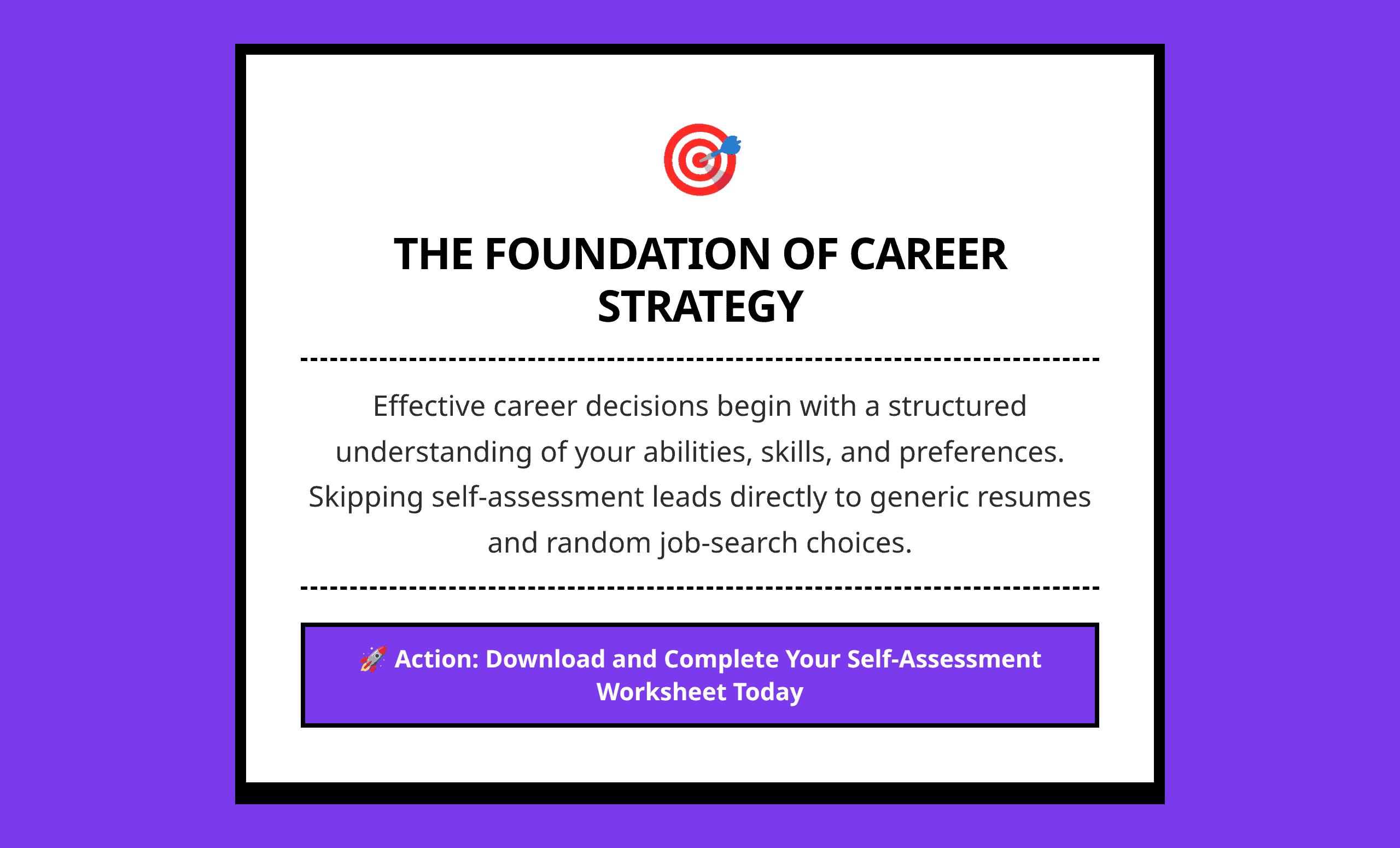
Self-assessment matters because career decisions are only as good as the information used to make them.
When people skip this step, they often choose jobs based on limited factors such as salary, convenience, or job title. While those factors matter, they do not necessarily predict long-term success or satisfaction.
Self-awareness helps clarify strengths, limitations, interests, and priorities. It also makes personal marketing easier because you can communicate your value more clearly to employers.
Consider two job seekers. One understands their strongest skills, preferred work environment, and long-term goals. The other applies broadly without much reflection. Even if both have similar qualifications, the first person is usually better prepared to make decisions, answer interview questions, and target appropriate opportunities.
Career planning becomes more effective when it begins with understanding yourself rather than reacting to available openings.
The Four Core Areas to Assess
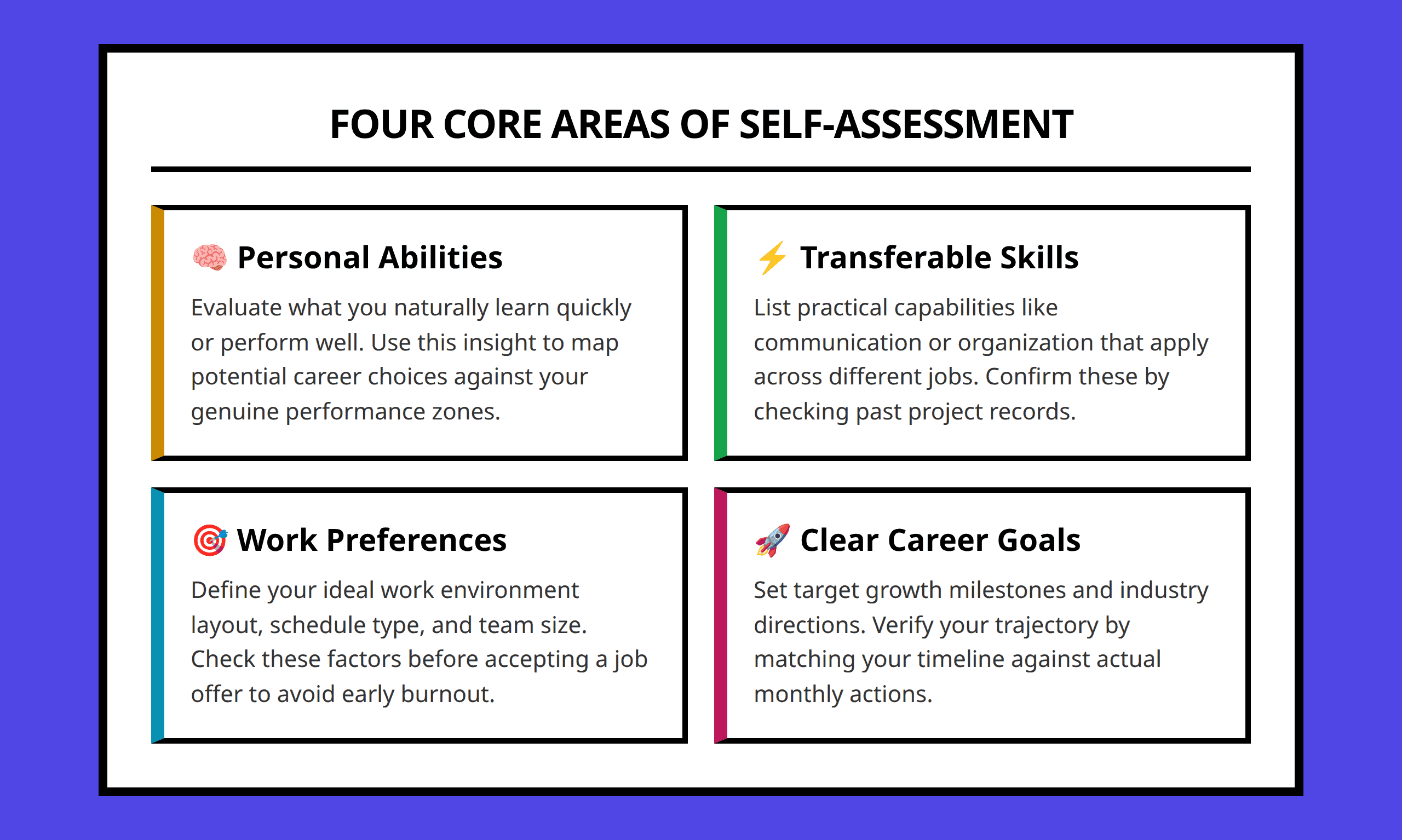
A practical self-assessment framework focuses on four connected areas: abilities, skills, preferences, and goals.
| Assessment Area | Key Question |
|---|---|
| Abilities | What am I naturally good at? |
| Skills | What have I learned to do effectively? |
| Preferences | What type of work environment suits me? |
| Goals | Where do I want my career to go? |
Abilities
Abilities refer to the strengths and talents you bring to situations. Some people excel at analyzing information, while others naturally communicate, organize, teach, or solve practical problems.
Identifying abilities helps you recognize patterns in your successes. These patterns often provide clues about careers that fit naturally with your strengths.
Skills and Transferable Skills
Skills differ from abilities because they are developed through learning and experience.
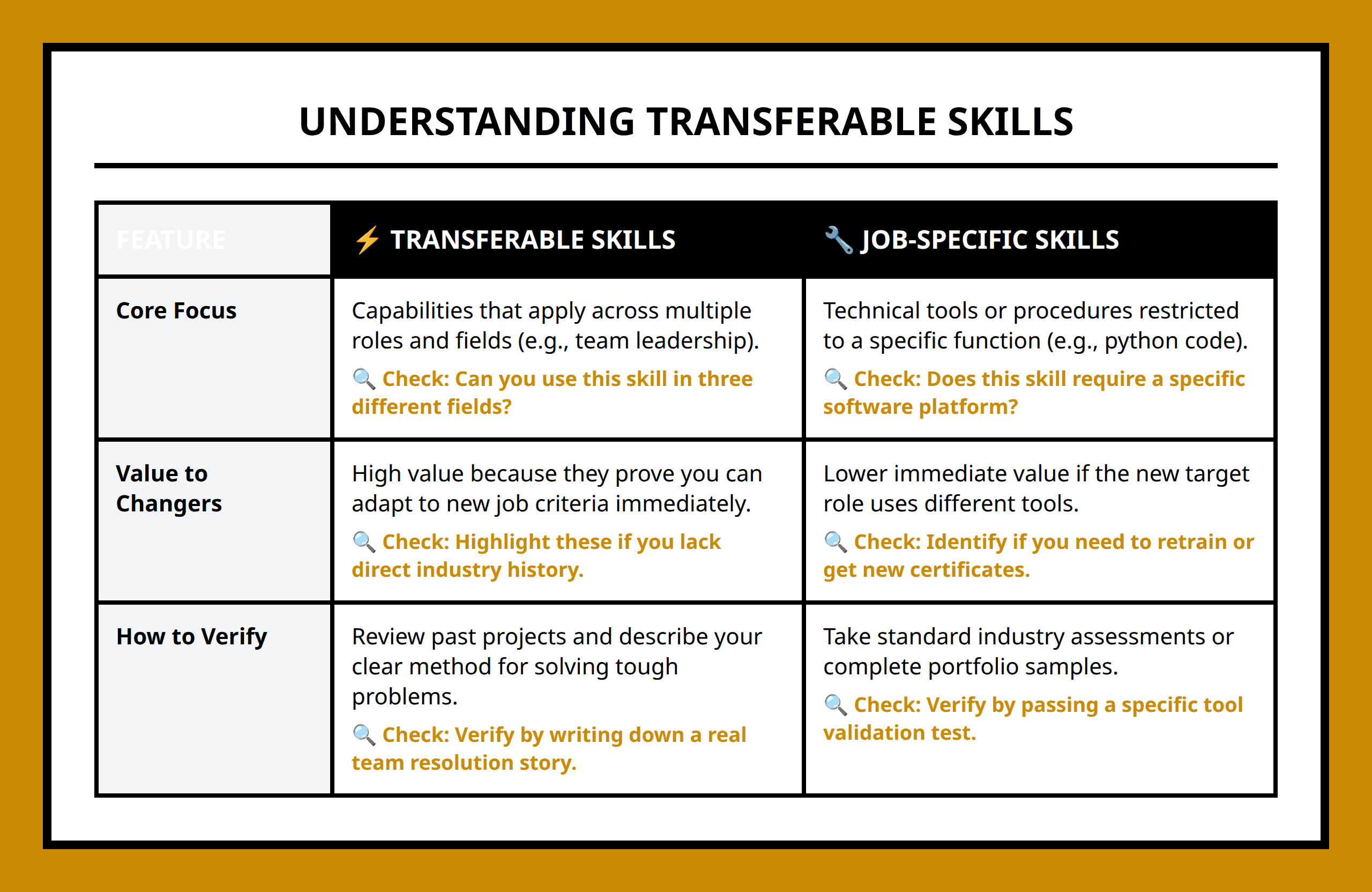
Some skills are highly specific to a particular role, while others transfer across industries and occupations. These transferable skills are especially important for students, career changers, and individuals exploring new opportunities.
Examples may include communication, teamwork, organization, leadership, problem-solving, and customer interaction. The value of transferable skills is that they remain useful even when job titles change.
A person moving from retail into office administration, for example, may discover that customer service, conflict resolution, and communication skills remain highly relevant in the new environment.
Work Preferences
Preferences often receive less attention than skills, but they can have a major impact on career satisfaction.
Work preferences may include:
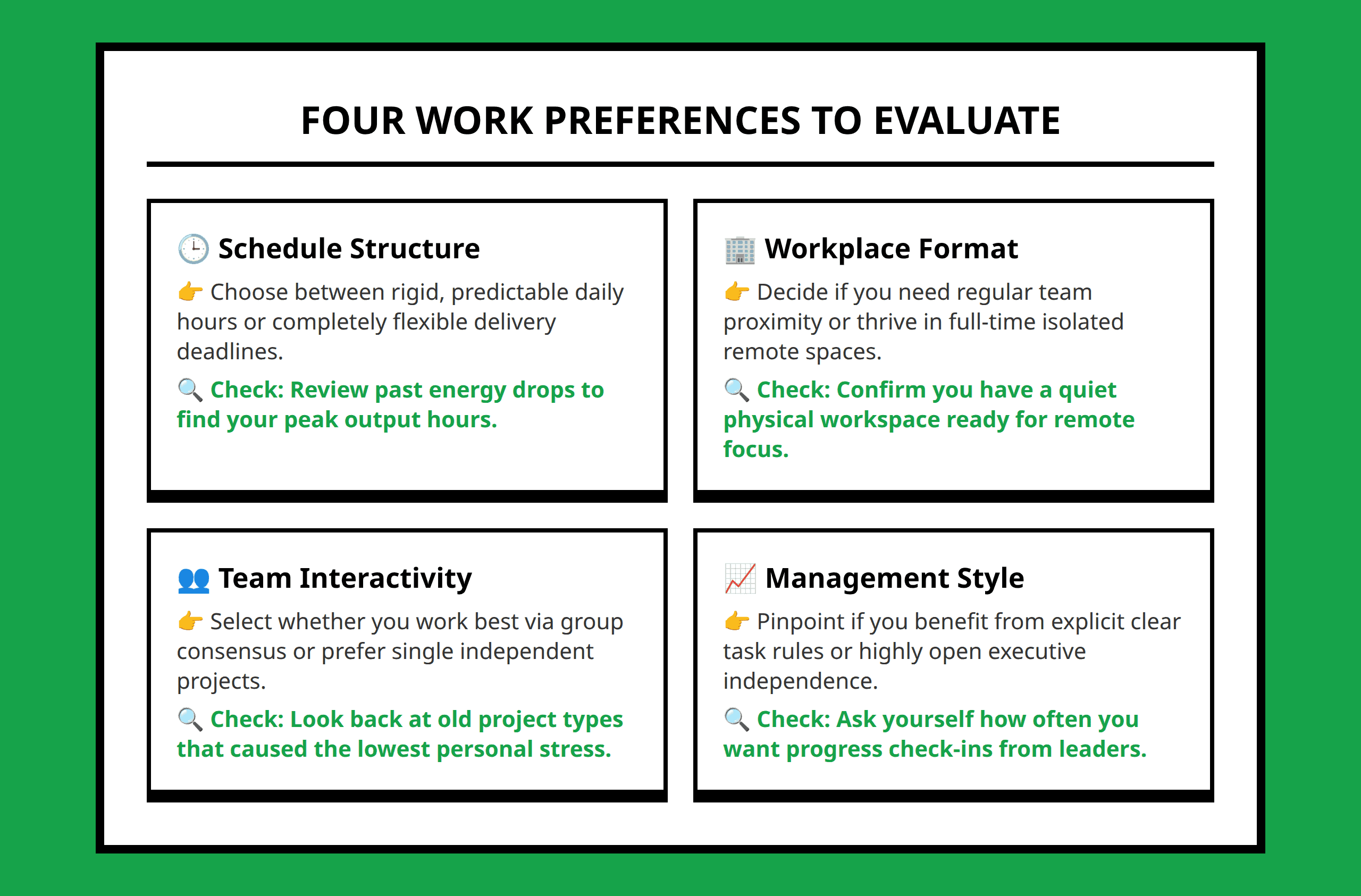
- Independent versus team-oriented work
- Structured versus flexible environments
- Indoor versus outdoor settings
- Fast-paced versus predictable workloads
- Frequent interaction versus limited interaction
A job that matches your abilities but conflicts with your preferred environment may become frustrating over time. Understanding preferences helps narrow career choices more effectively.
Career Goals
Goals provide direction for decision-making.
Without goals, career planning often becomes reactive. With goals, it becomes intentional. Goals do not need to be permanent, but they should provide enough clarity to guide current decisions.
Short-term goals may focus on gaining experience or learning a new skill. Longer-term goals may involve leadership opportunities, specialized expertise, or career advancement.
Turning Self-Knowledge into Career Action
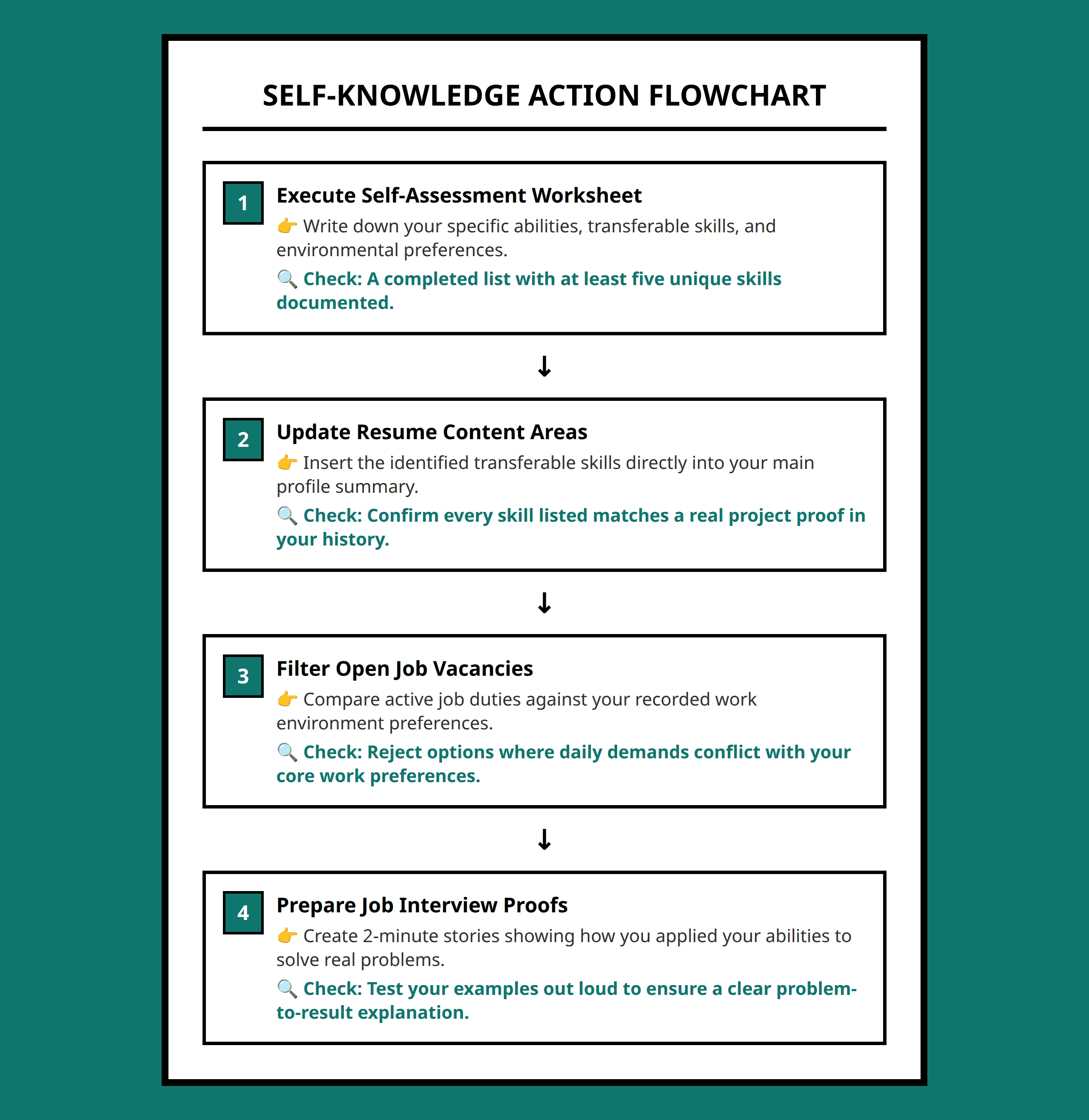
Self-assessment becomes valuable when it influences real decisions.
The information you gather should shape how you present yourself and where you focus your efforts.
Improve Your Resume
A resume becomes stronger when it highlights the abilities and skills most relevant to your target opportunities.
Instead of listing every responsibility from previous positions, emphasize experiences that demonstrate your strongest capabilities.
Prepare Better Interview Answers
Interview questions often require self-awareness.
Employers regularly ask about strengths, accomplishments, challenges, and career interests. Candidates who have completed a thoughtful self-assessment typically answer these questions with greater confidence and clarity.
Target the Right Opportunities
One benefit of self-assessment is that it helps eliminate poor matches.
Rather than applying everywhere, you can focus on opportunities that align with your strengths, preferences, and goals.
For example, someone who enjoys collaborative problem-solving may prioritize team-based environments. Someone who values independence may focus on positions that provide greater autonomy.
This kind of targeting often saves time and improves decision quality throughout the job search process.
Self-Assessment Is an Ongoing Process
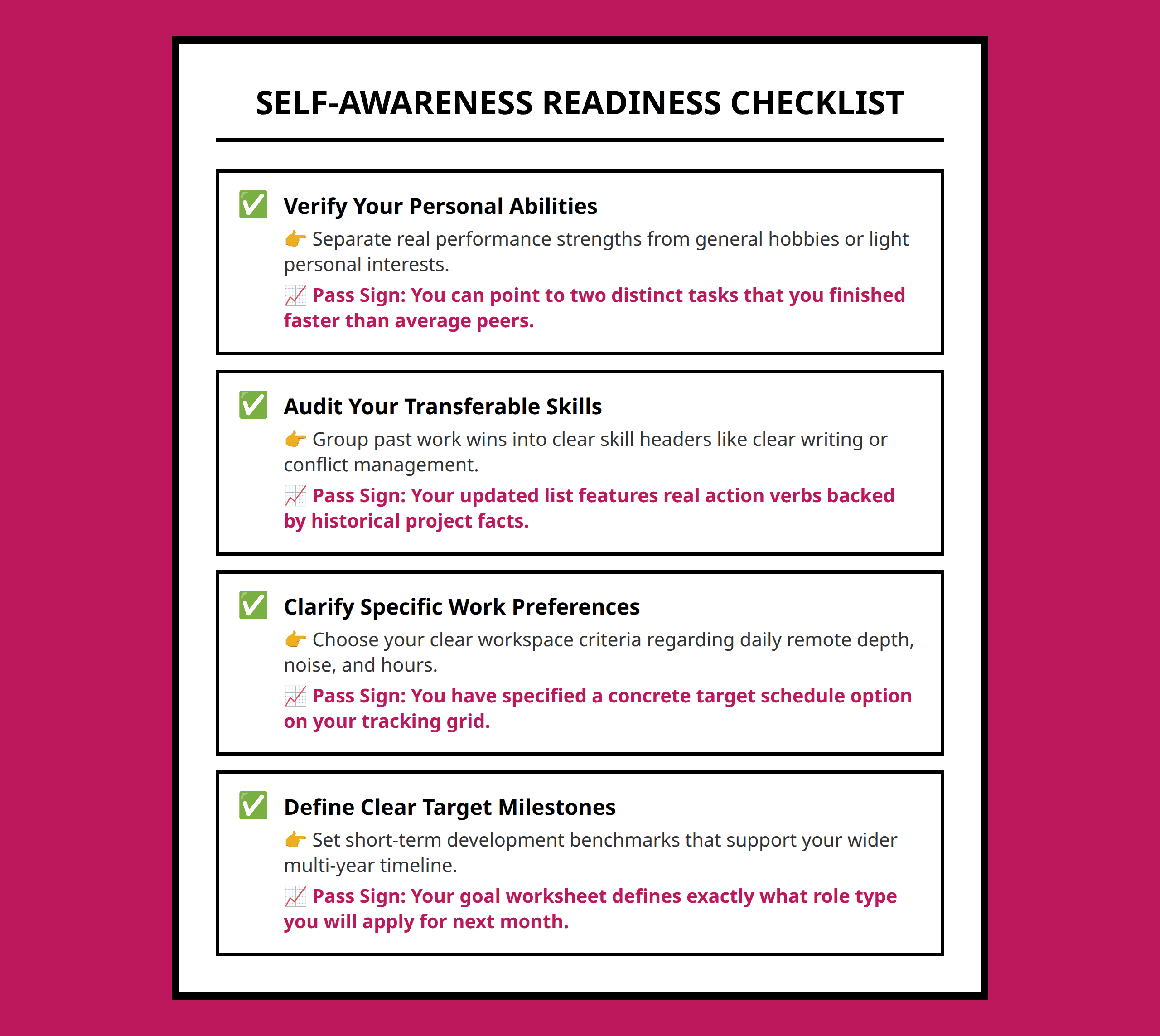
Many people treat self-assessment as a one-time exercise, but it works best when revisited regularly.
Skills grow, interests change, and goals evolve over time. Periodically reviewing your strengths, preferences, and career direction helps keep decisions aligned with who you are today rather than who you were several years ago.
A practical next step is to create a simple worksheet with four sections: abilities, skills, preferences, and goals. Spend a few minutes writing down your answers. The patterns that emerge can provide valuable direction for your next career decision.
FAQ
- Self-Assessment: The process of evaluating your abilities, skills, preferences, values, and goals to make better career decisions.
- Transferable Skills: Skills that remain useful across multiple jobs, industries, and professional settings.
- Career Goals: The professional outcomes or directions you hope to achieve over time.
- Work Preferences: The types of environments, activities, and conditions in which you perform and feel your best.
- Self-Awareness: A clear understanding of your strengths, limitations, interests, and personal characteristics.
References:
- https://www.myskillsfuture.gov.sg/content/portal/en/assessment/landing.html
- https://info.lse.ac.uk/current-students/careers/information-and-resources/career-planning/Self-assessment-and-career-matching-tools
- https://careersportal.ie/careerplanning/self_assessment.php
- https://www.brainhunter.com/CareerSite/MITAC/English/Career_Planning_eng/JS_SA_selfAssessment.htm
- https://www.stonybrook.edu/commcms/career-center/students/self_assessment.php
- https://www.linkedin.com/top-content/career/career-achievement-milestones/self-assessment-in-career-planning/
- https://www.mcgill.ca/caps/students/explore/self-assessment
- https://ecampusontario.pressbooks.pub/scec/chapter/the-importance-of-self-assessment-in-career-planning/
- https://capd.mit.edu/channels/self-assessments/
- https://www.indeed.com/career-advice/career-development/self-assessments
- https://www.careeronestop.org/ExploreCareers/Assessments/interests.aspx
