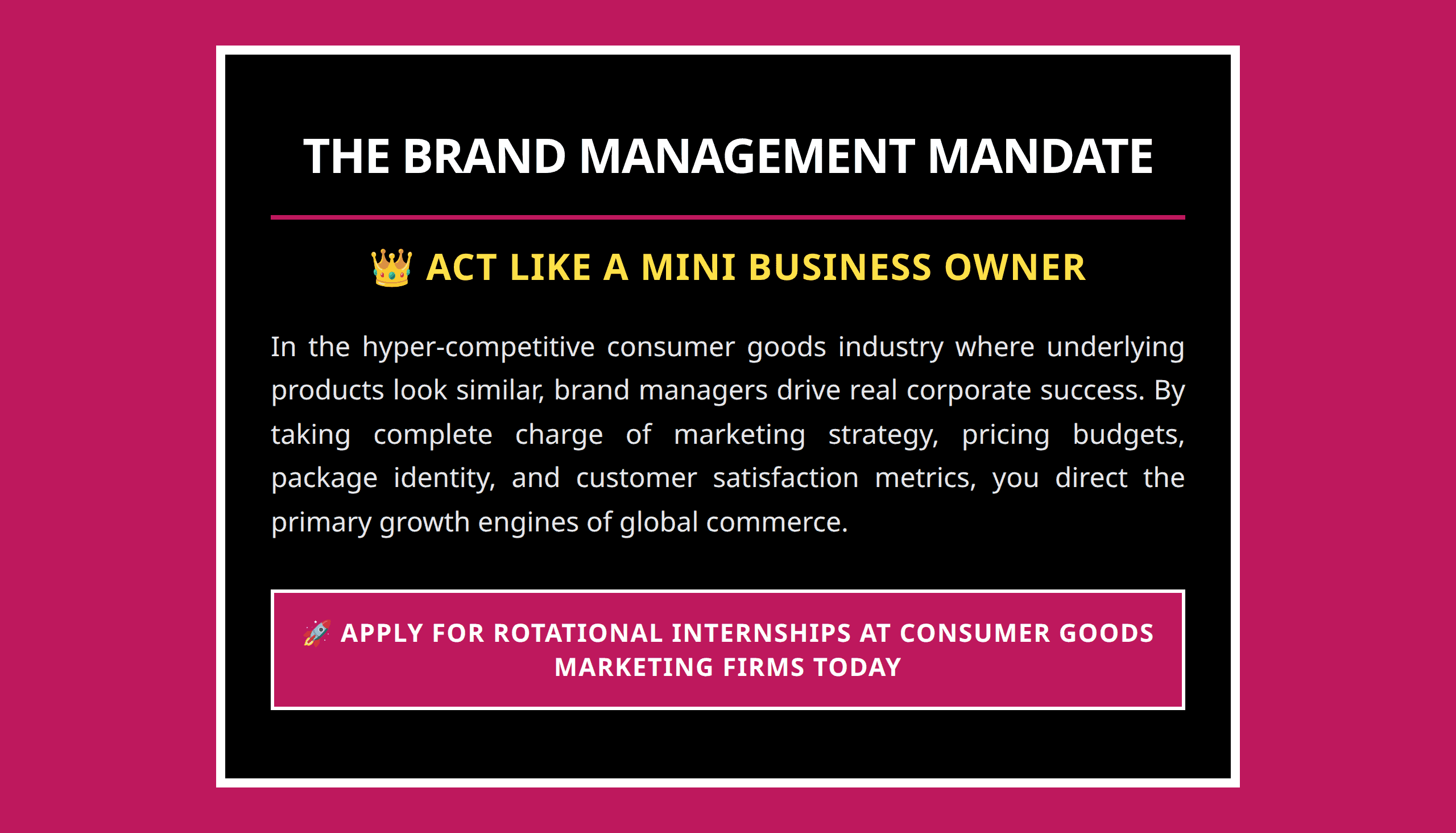
Brand management careers in CPG sit at the center of how everyday products compete, grow, and survive in crowded markets. Brand managers act like mini-CEOs for individual products, shaping strategy, marketing, packaging, and performance inside large global companies.
When people think about marketing jobs, they often imagine advertising or social media campaigns. But in consumer goods companies, brand management is something deeper and more structural. It is the role that connects product strategy, customer perception, and business results into one responsibility.
What makes this career especially important is that most consumer packaged goods are similar in function. Soap is soap, cereal is cereal, and toothpaste is toothpaste. The difference is not usually the product itself, but how the brand is managed in the market. That is where brand managers come in.
Takeaways
- Brand managers are responsible for marketing strategy, budgeting, packaging, and customer satisfaction for specific products.
- In CPG companies, branding is more important than product differences because many goods are functionally similar.
- Major companies like Procter & Gamble and Unilever treat brands as individual business units with dedicated managers.
- Career entry often happens through internships, campus recruiting, and structured rotation programs.
What a Brand Manager Actually Does
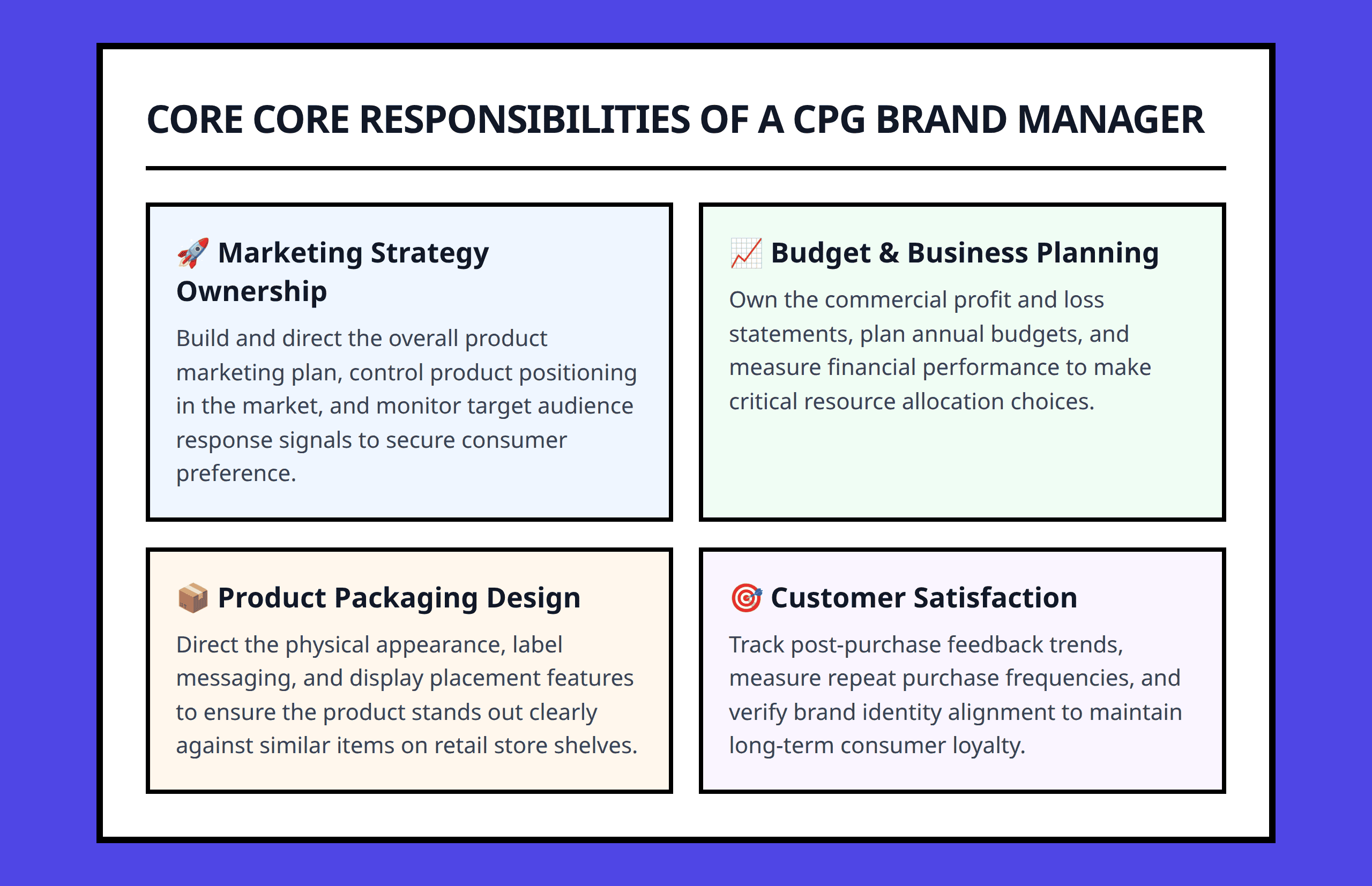
A brand manager in a consumer goods company is responsible for running a product or group of products like a small business. Instead of focusing on one narrow task, the role combines strategy, marketing, finance, and customer experience into a single responsibility.
One of the core duties is marketing strategy ownership. A brand manager decides how a product should be positioned in the market, what message it should communicate, and how it should compete against similar products. For example, a toothpaste brand like Crest is not just sold—it is positioned around ideas like freshness, whitening, or protection, depending on the strategy set by the brand team.
Another major responsibility is budget and business planning. Brand managers often decide how much money should go into advertising campaigns, packaging redesigns, or product improvements. In large companies like Procter & Gamble, this means managing significant financial resources tied to specific brands rather than entire departments.
Packaging and product presentation also fall under the role. A brand manager works with design teams to ensure that a product stands out on a crowded shelf. Even small details—like color, logo placement, or packaging shape—can influence whether a customer picks one product over another in a store aisle.
Finally, brand managers are responsible for customer satisfaction and brand identity. They track how consumers respond to products, monitor feedback, and adjust strategies when needed. In simple terms, they are accountable for how people feel about the brand and whether they keep buying it.
A useful way to understand this role is to imagine managing a product like Oreo cookies. The brand manager is not baking cookies, but deciding how Oreo is advertised, how it is packaged, what promotions it runs, and how it stays relevant compared to other snack options.
Why Branding Is Central in CPG Companies
Branding is not just a marketing layer in consumer goods—it is the core competitive tool. Most products in this industry are functionally similar, which means consumers often make decisions based on perception, habit, and emotional connection rather than technical differences.
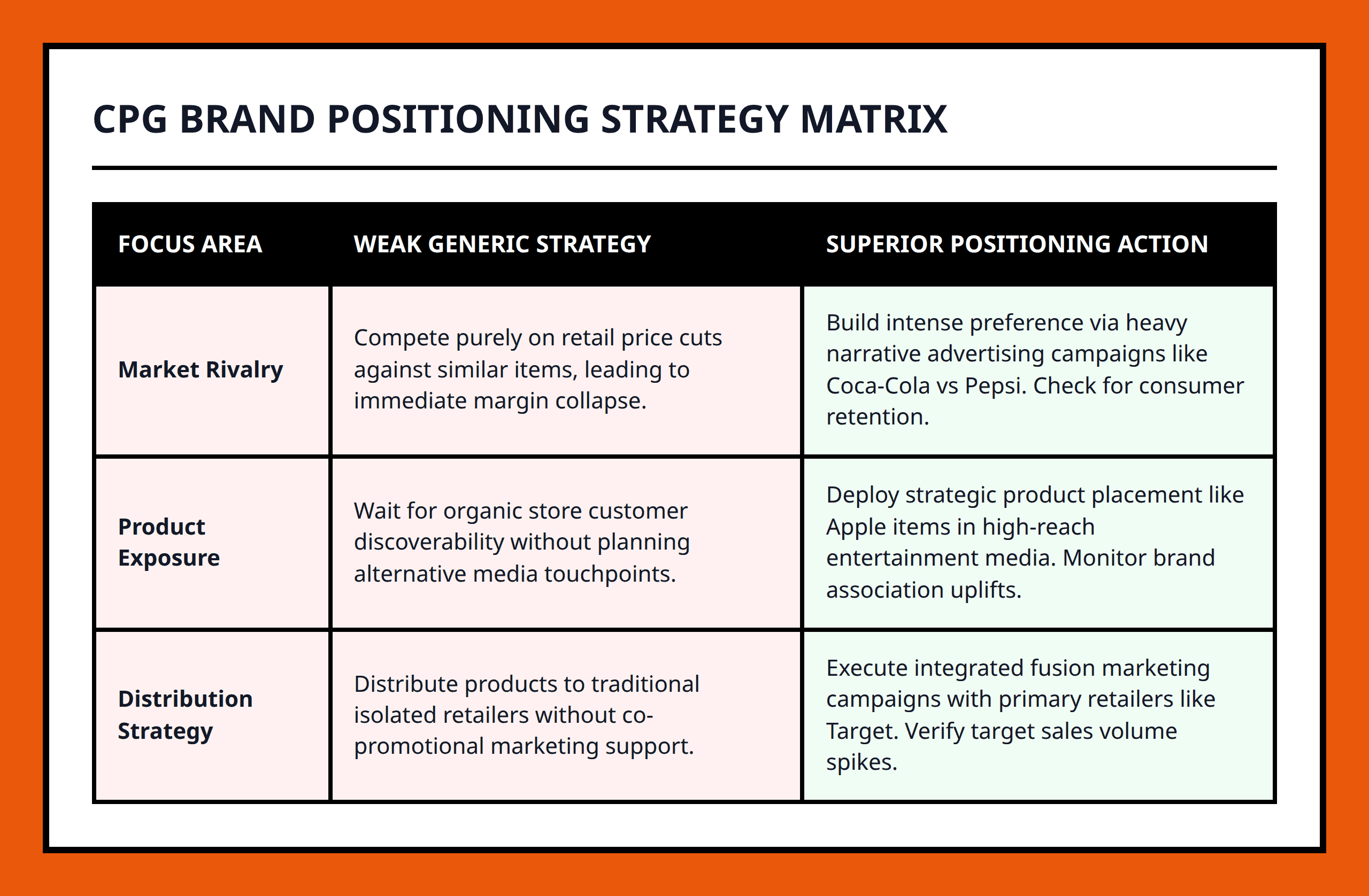
Because of this, strong branding becomes the main way companies differentiate themselves. A bottle of soda from one company may taste similar to another, but consumers may still strongly prefer Coca-Cola over Pepsi or vice versa because of brand identity, advertising history, and emotional association.
This is why advertising plays such a central role in the industry. Consumer goods companies collectively invest heavily in marketing to maintain brand visibility. In fact, large players like Procter & Gamble and Johnson & Johnson are among the biggest advertising spenders globally, reflecting how important brand awareness is for sales performance.
Brand management also explains why companies treat brands as independent “business units.” Instead of managing a company as one large product portfolio, firms often assign dedicated teams to individual brands. Each brand operates like a small business inside the larger corporation, with its own strategy, goals, and performance metrics.
Real-world examples make this clearer. Coca-Cola and Pepsi are often used to illustrate how branding drives competition. Both products serve the same basic need, but their marketing, messaging, and brand identity create strong consumer loyalty on both sides.
Brand visibility also extends beyond traditional advertising. Companies often use product placement strategies to reinforce brand presence. For example, Apple products frequently appear in entertainment media, subtly reinforcing their image as modern and desirable technology.
Retail partnerships also influence branding strategies. Campaigns like fusion marketing—where brands are paired with retail partners such as Target—allow companies to reach customers in more integrated ways, combining product identity with retail experience.
Career Path and Recruitment in Brand Management
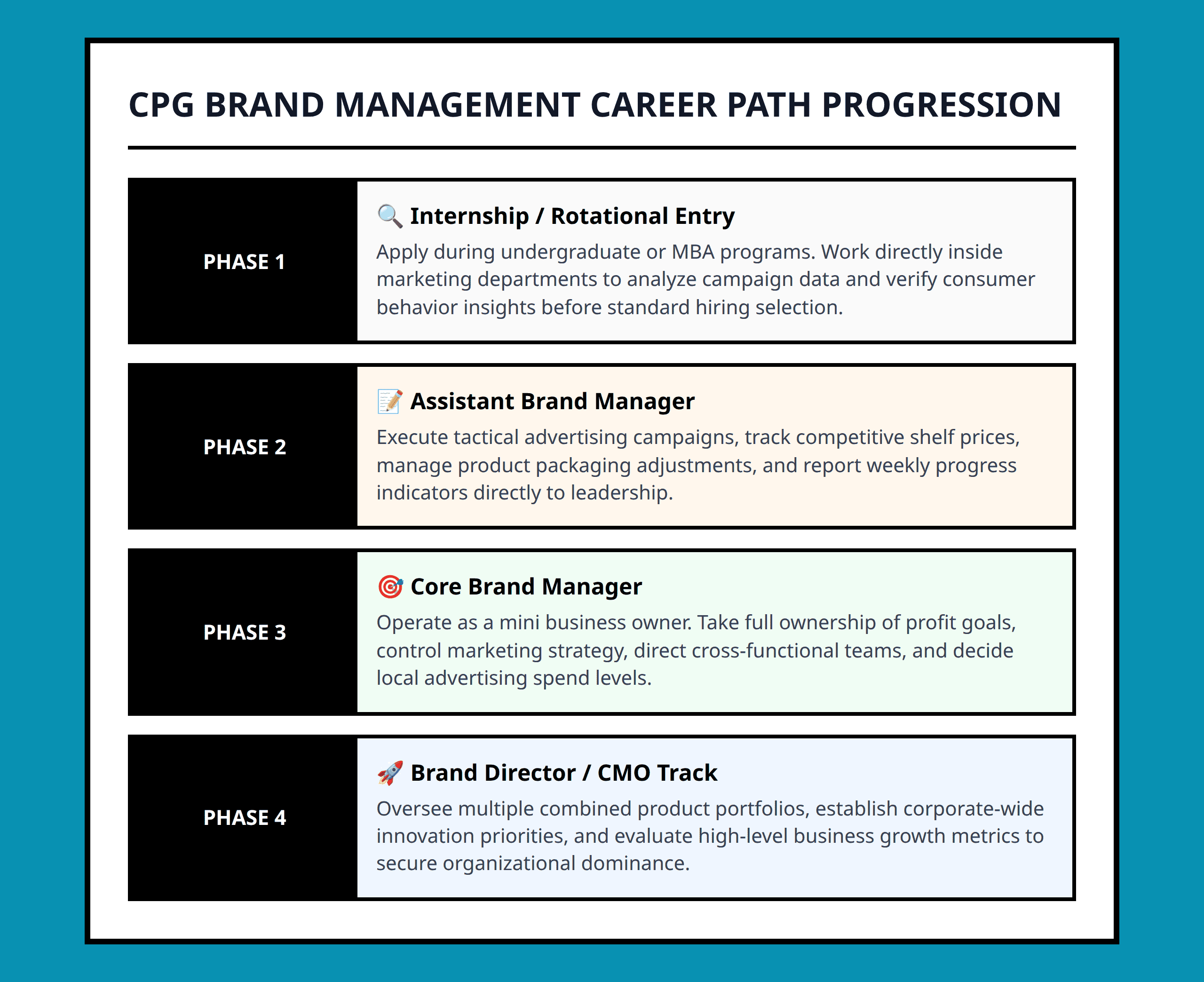
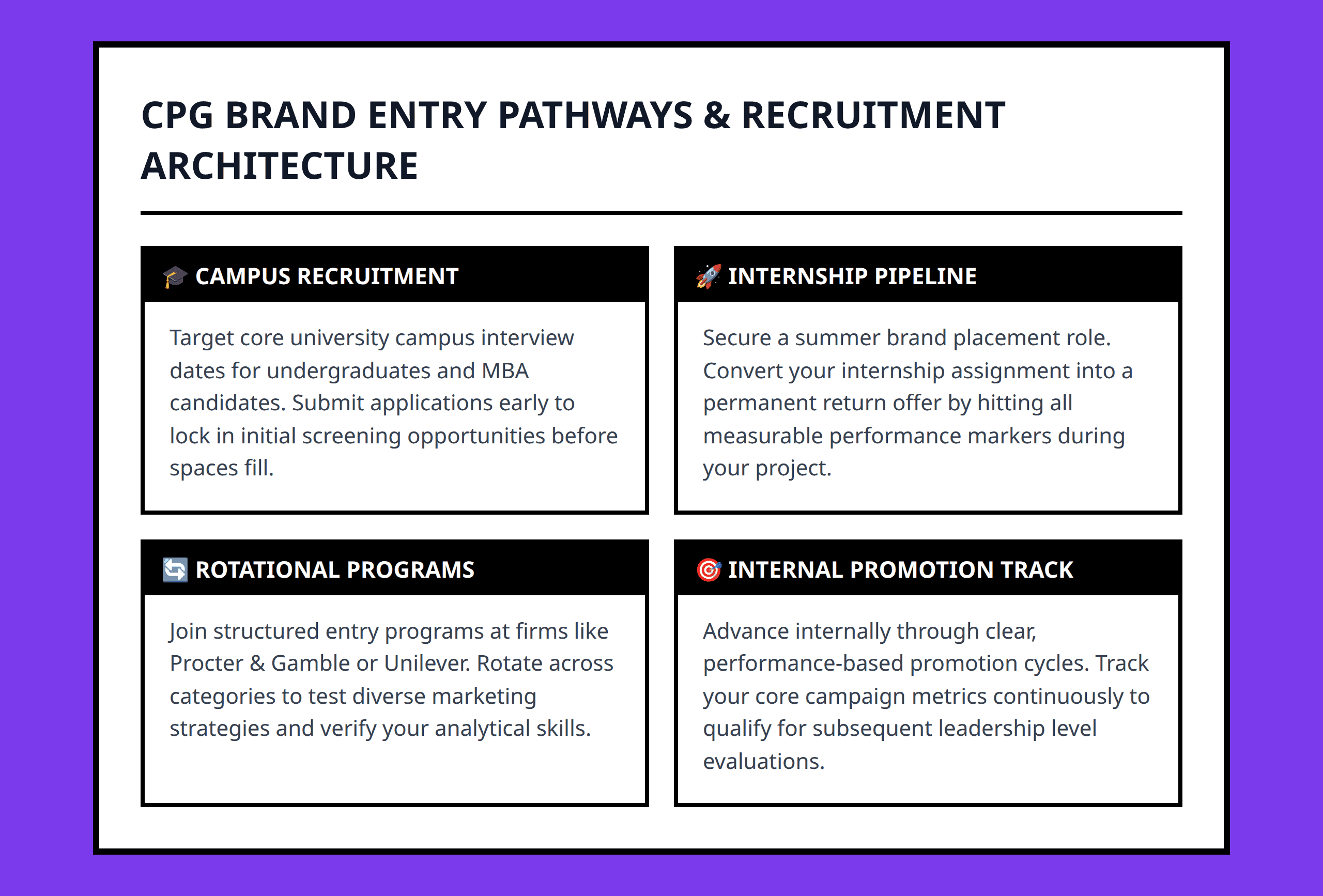
Brand management careers typically start through structured entry programs in consumer goods companies. Large organizations such as Procter & Gamble and Unilever actively recruit students and graduates into marketing and brand-focused roles.
One of the most common entry points is campus recruiting. Companies visit universities to hire undergraduates and MBA students into marketing analyst or assistant brand manager positions. These roles often serve as the foundation for long-term careers in brand leadership.
Internships are another key pathway. Many companies use internships to evaluate potential full-time hires. A successful internship in brand marketing can often lead directly to a job offer, especially in competitive firms.
Once inside the company, employees often go through rotation programs. These programs allow new hires to work in different departments such as marketing, sales, and product development. The goal is to give future brand managers a full understanding of how the business operates before they take on full brand ownership.
Internal hiring is also a major feature of this industry. Many senior brand management roles are filled by promoting from within. Companies prefer to develop talent internally because brand knowledge and category experience are highly valuable.
Over time, professionals in this field may move into more senior positions where they manage multiple brands or entire product categories. The progression is often structured, but competitive, requiring both analytical ability and strong marketing instincts.
A typical early-career scenario might involve a graduate joining a company like Unilever, rotating through a sales role for six months, then moving into a junior brand role for a personal care product. From there, they gradually take on more responsibility, eventually managing a full brand portfolio.
Why This Career Feels Like Running a Small Business
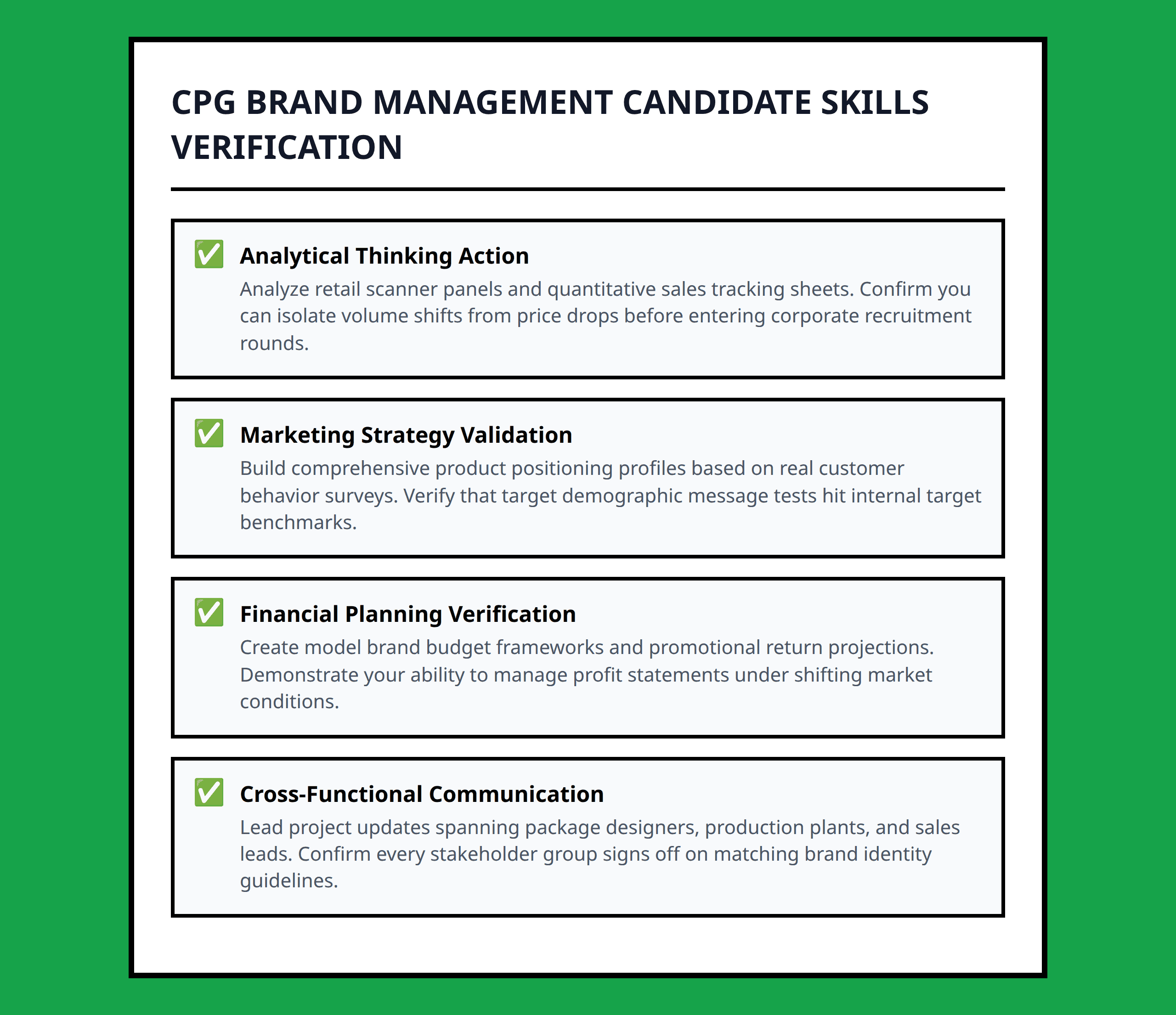
One of the most defining aspects of brand management is that it feels like running a small business inside a large corporation. Every brand has its own performance targets, marketing budget, and customer expectations.
This structure forces brand managers to think across multiple dimensions at once. They are not just marketers—they are decision-makers balancing revenue, customer satisfaction, and long-term brand health.
For example, if a snack brand is losing market share, the brand manager might need to adjust advertising strategy, redesign packaging, or rethink pricing promotions. Each decision has both short-term and long-term consequences.
This combination of responsibility and visibility is why brand management is often seen as one of the fastest paths to leadership in consumer goods companies.
FAQ
- Brand Management: A role responsible for overseeing marketing, strategy, and performance of a specific product or brand within a company.
- CPG (Consumer Packaged Goods): Everyday products that are consumed quickly and repurchased frequently, such as food, beverages, and household items.
- Product Positioning: The way a product is defined and presented in the market to influence how consumers perceive it.
- Rotation Program: A structured training system where employees move through different departments to gain broad business experience.
- Brand Equity: The value a brand holds in the minds of consumers based on perception, recognition, and loyalty.
