Networking for job search success is about building professional relationships that provide information, visibility, and access to opportunities. A strong network can help you learn about employers, gain referrals, and discover openings that may never appear on job boards.
Many job seekers spend most of their energy submitting applications online. While applications remain important, they are only one part of a successful job search strategy. Relationships often influence who hears about opportunities first and who receives valuable introductions.
I find that networking is frequently misunderstood. Some people view it as asking strangers for jobs. In reality, effective networking is about learning, sharing information, and creating professional connections that benefit everyone involved.
Takeaways
- Networking increases access to information, referrals, and professional opportunities.
- Informational interviews help you learn about careers without directly asking for a job.
- Career fairs provide direct access to employers and recruiters.
- Social networking platforms can expand professional visibility when used consistently.
- Preparation and follow-up often matter as much as the initial conversation.
Why Networking Works
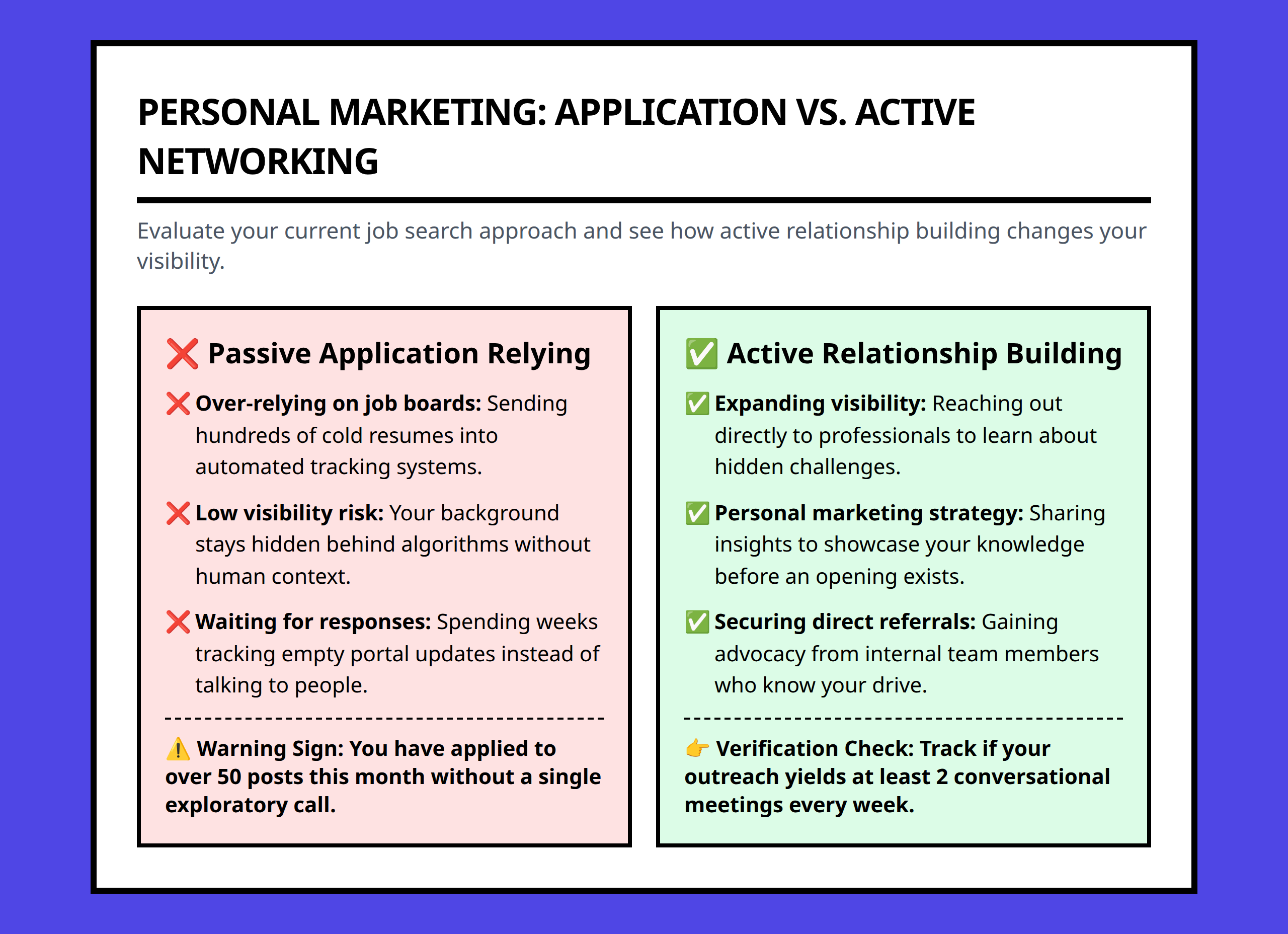
Networking works because career opportunities are often connected to people as much as positions.
Employers look for qualified candidates, but they also value trusted recommendations, professional impressions, and evidence of genuine interest. Networking helps job seekers become visible before a formal hiring decision occurs.
From a personal marketing perspective, networking allows you to communicate your strengths directly rather than relying entirely on a resume or online application.
Consider two candidates with similar qualifications. One submits applications and waits. The other actively attends events, speaks with professionals, learns about organizations, and maintains connections. The second candidate is likely to hear about opportunities earlier and develop stronger professional visibility.
Networking does not replace qualifications. Instead, it helps ensure those qualifications are noticed.
Networking Methods That Create Opportunities
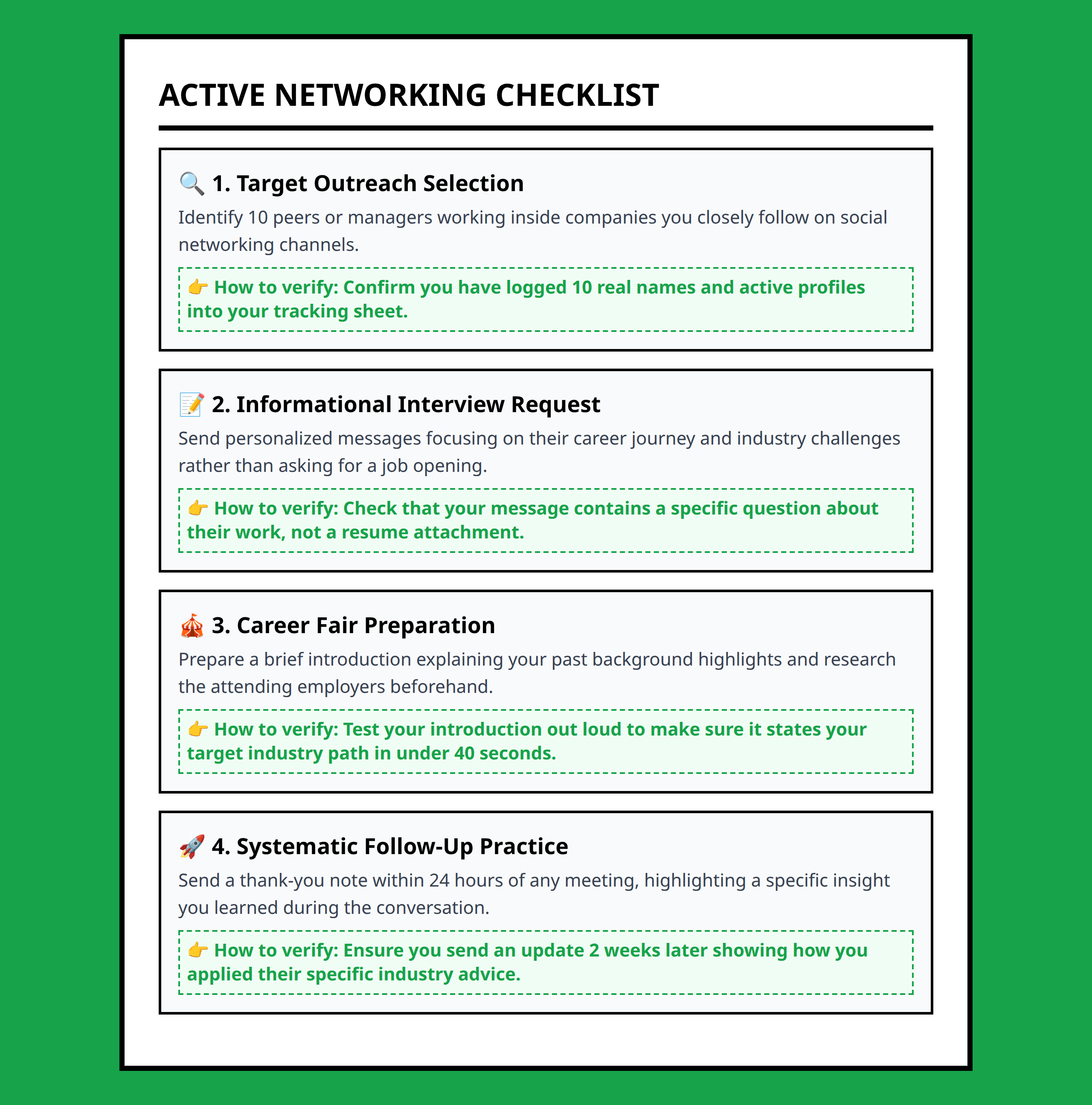
Different networking methods serve different purposes. A strong job search strategy often combines several approaches rather than relying on only one.
Informational Interviews
An informational interview is a conversation designed to gather information rather than request employment.
This distinction matters because it changes the purpose of the interaction. Instead of asking for a job, you are seeking insight about an industry, occupation, organization, or career path.
Questions might focus on:
- Daily responsibilities in a role
- Skills that employers value
- Career paths within an industry
- Advice for entering the field
- Current trends affecting opportunities
These conversations often provide practical information that is difficult to find through job postings alone.
Career Fairs
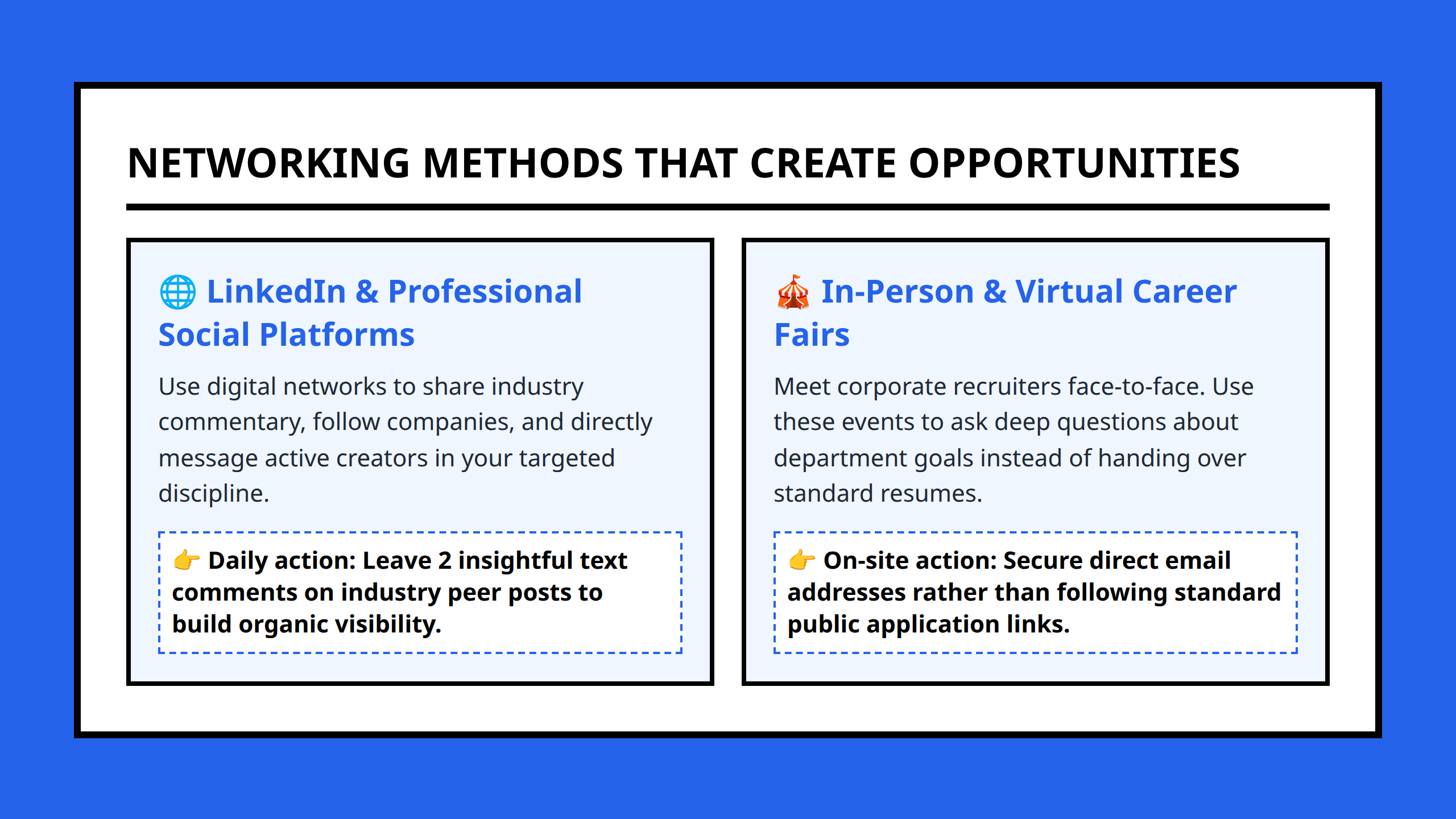
Career fairs create opportunities for direct interaction with employers.
Unlike online applications, career fairs allow employers and candidates to meet face-to-face, exchange information, and begin professional relationships.
Preparation significantly improves results. Researching participating organizations beforehand helps create more meaningful conversations and demonstrates genuine interest.
A candidate who arrives with specific questions usually stands out more than someone who simply distributes resumes without a clear purpose.
Professional Social Networking
Social networking has become an important part of modern career development.
Professional platforms allow job seekers to connect with industry professionals, learn about organizations, follow career trends, and increase visibility.
Social networking is most effective when it supports relationship-building rather than self-promotion alone. Sharing professional interests, participating in discussions, and maintaining a consistent profile can help strengthen your professional presence.
Networking Activity Checklist
- Identify professionals in your target field.
- Schedule informational interviews.
- Attend career fairs and industry events.
- Maintain an updated professional profile.
- Follow up after meaningful conversations.
- Track contacts and important insights.
The Importance of Follow-Up
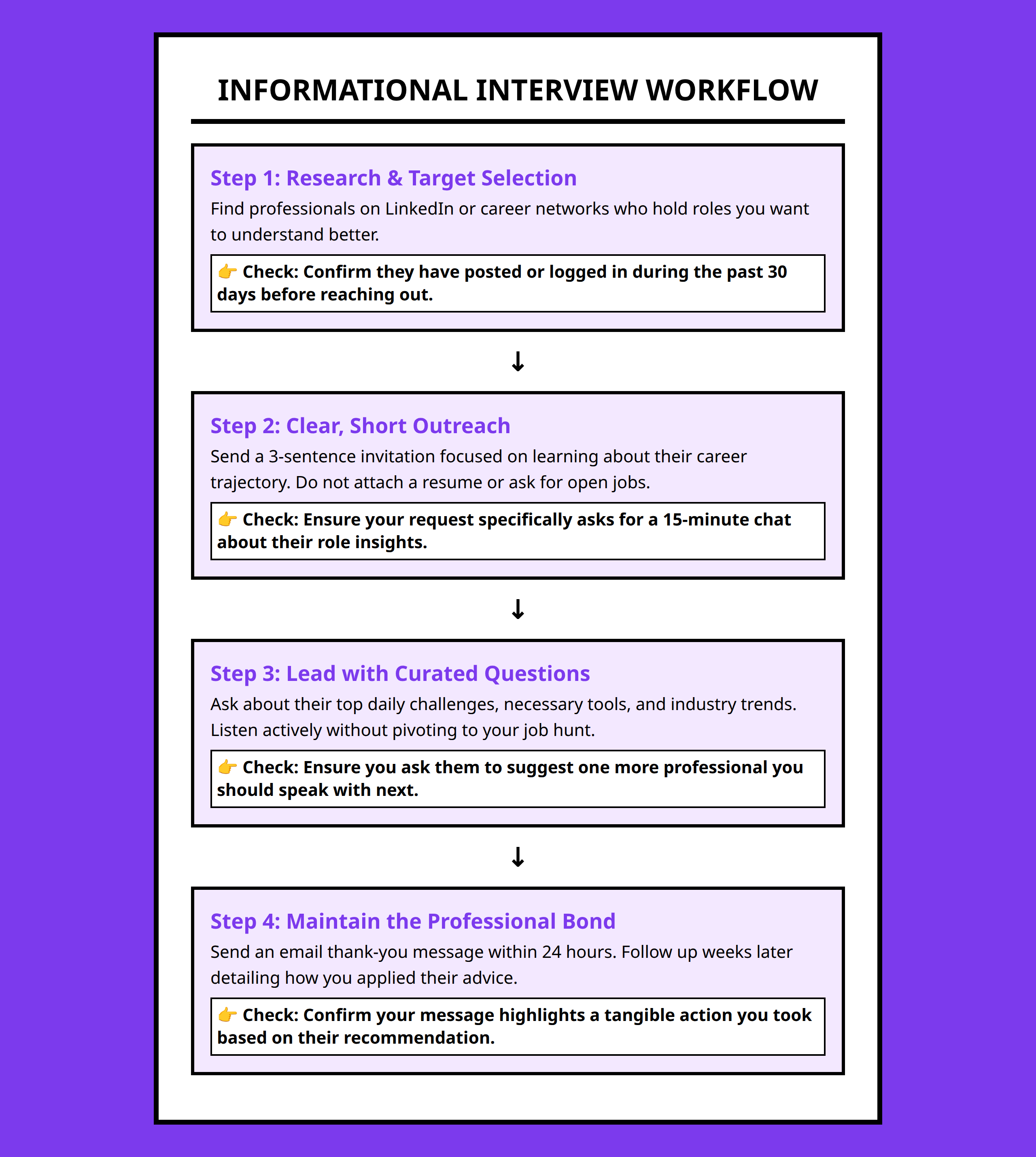
Many networking efforts fail not because of poor conversations, but because there is no follow-up.
A brief thank-you message, a professional update, or a future check-in can help maintain a connection after an initial meeting.
Professional relationships often develop gradually. One conversation may not lead directly to an opportunity, but consistent and respectful communication can strengthen connections over time.
Following up also demonstrates professionalism, appreciation, and genuine interest.
Mistakes That Limit Networking Results
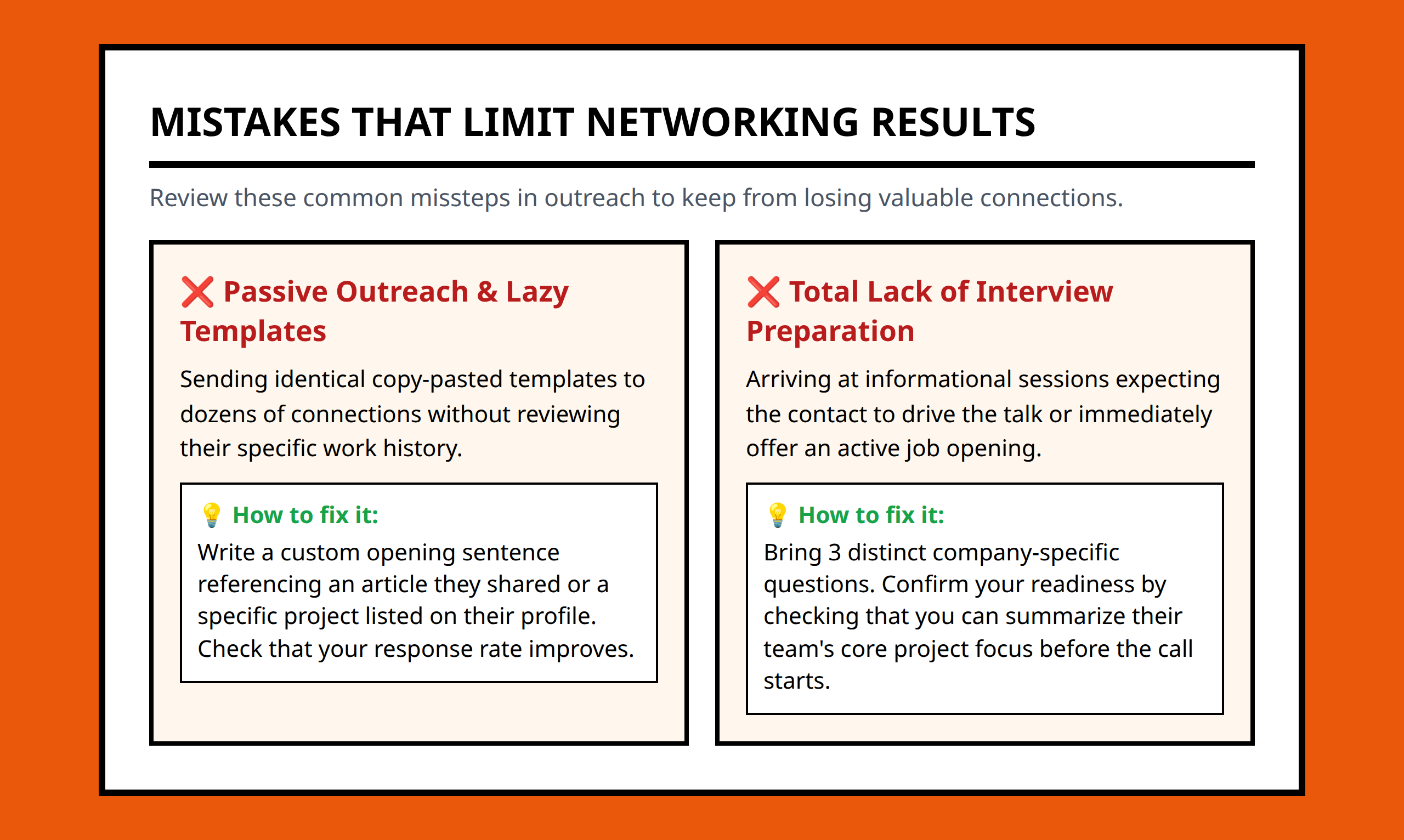
Several common mistakes reduce the effectiveness of networking efforts.
Waiting for Opportunities to Appear
Passive job searching limits visibility.
Relying exclusively on job boards or employer websites often means competing with large numbers of applicants. Networking expands access to information and creates additional paths to opportunity.
Lack of Preparation
Preparation helps networking conversations become more productive.
Without preparation, questions may feel generic and interactions may lack direction. Researching organizations, industries, and individuals beforehand creates stronger conversations.
Focusing Only on Immediate Results
Networking is a long-term activity.
Approaching every conversation with the expectation of an immediate job offer can create frustration. The purpose is often to gather information, build relationships, and increase visibility over time.
Neglecting Professional Presentation
Networking is part of personal marketing.
Your communication style, preparation, professionalism, and follow-up all contribute to the impression you create. Consistency between your resume, online presence, and personal interactions strengthens credibility.
Building Networking Into Your Job Search Strategy
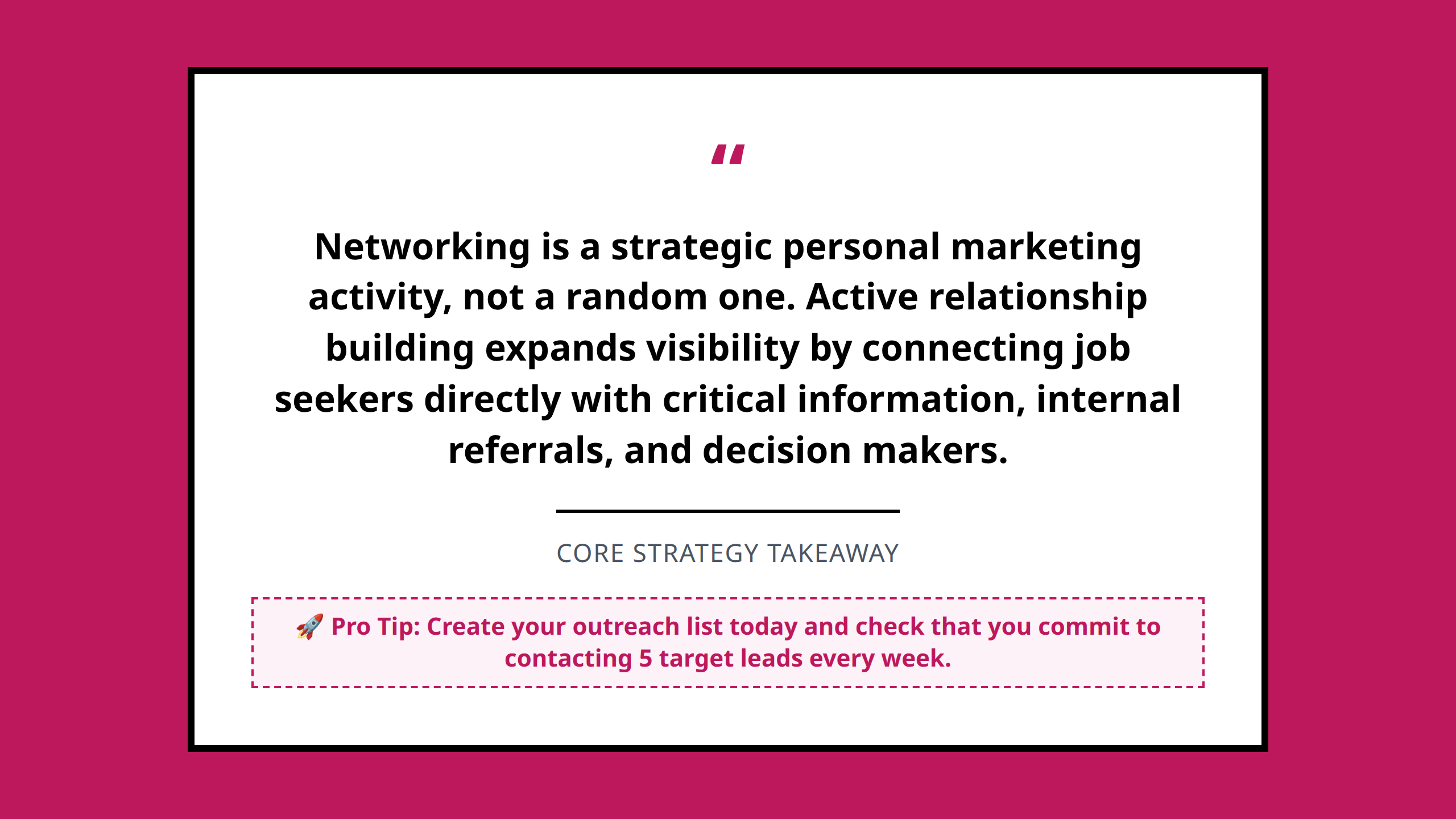
The most effective networking is intentional rather than random.
Start by identifying industries, organizations, and professionals connected to your goals. Then create a simple plan for reaching out, attending events, conducting informational interviews, and maintaining professional relationships.
Small, consistent actions often produce better results than occasional bursts of activity. A few meaningful conversations each month can gradually build a network that supports both current opportunities and long-term career growth.
A practical next step is to create a networking outreach list with five professionals, organizations, or events related to your career interests. Taking that first step is often what turns networking from an idea into a useful career habit.
FAQ
- Networking: The process of building and maintaining professional relationships that may provide information, support, or opportunities.
- Informational Interview: A conversation focused on learning about a profession, industry, or organization rather than seeking immediate employment.
- Career Fair: An event where employers and job seekers meet to discuss opportunities and exchange information.
- Professional Networking Platform: An online service that helps professionals connect, share information, and build career-related relationships.
- Personal Marketing: The process of communicating your skills, qualifications, and value to potential employers.
References:
- https://web-apps-shib.stern.nyu.edu/careerresourcehub/static/resources/Networking_and_Informational_Interviewing_Guide.pdf
- https://www.linkedin.com/top-content/career/job-search-and-career-transition/job-search-preparation-strategies/
- https://www.careereducation.columbia.edu/resources/key-strategies-networking-and-informational-interviewing
- https://careerenlightenment.com/networking-strategies-for-job-search
- https://asktraining.com.sg/blog/not-getting-hired-heres-how-networking-can-help-you-break-through/
- https://ischool.sjsu.edu/social-media-job-search
- https://firstproinc.com/uncategorized/networking-101-proven-strategies-to-enhance-your-job-search/
- https://ocs.yale.edu/stem-ppg-module-3-informational-interviewing-and-networking/
- https://www.careersourcesfl.com/the-power-of-networking-in-the-job-search
- https://careers.umbc.edu/students/network/networking101/tips/
