Video game animators create lifelike characters by transforming drawings into rigged 3D models that move inside game engines like Unity through a structured production pipeline. This career blends art, technology, and collaboration, and it requires both creative skill and technical understanding of how games are built.
Many people are drawn to game animation because they love games but are not always sure how characters actually come to life on screen. The process is more structured than it looks, involving multiple stages from early sketches to fully interactive 3D models.
What often surprises beginners is how collaborative the work really is. Animators are not working alone—they are constantly exchanging feedback with designers, programmers, and other artists to make sure everything fits together inside the game.
Takeaways
- Video game animation follows a structured pipeline from sketching to engine integration.
- Tools like Autodesk Maya and ZBrush are central to building 3D characters.
- Animators must collaborate closely with designers and programmers throughout production.
- The field offers strong demand, with an 8% projected job growth through 2026.
- Many animators work freelance, and portfolios are more important than formal credentials alone.
Understanding the Video Game Animation Pipeline
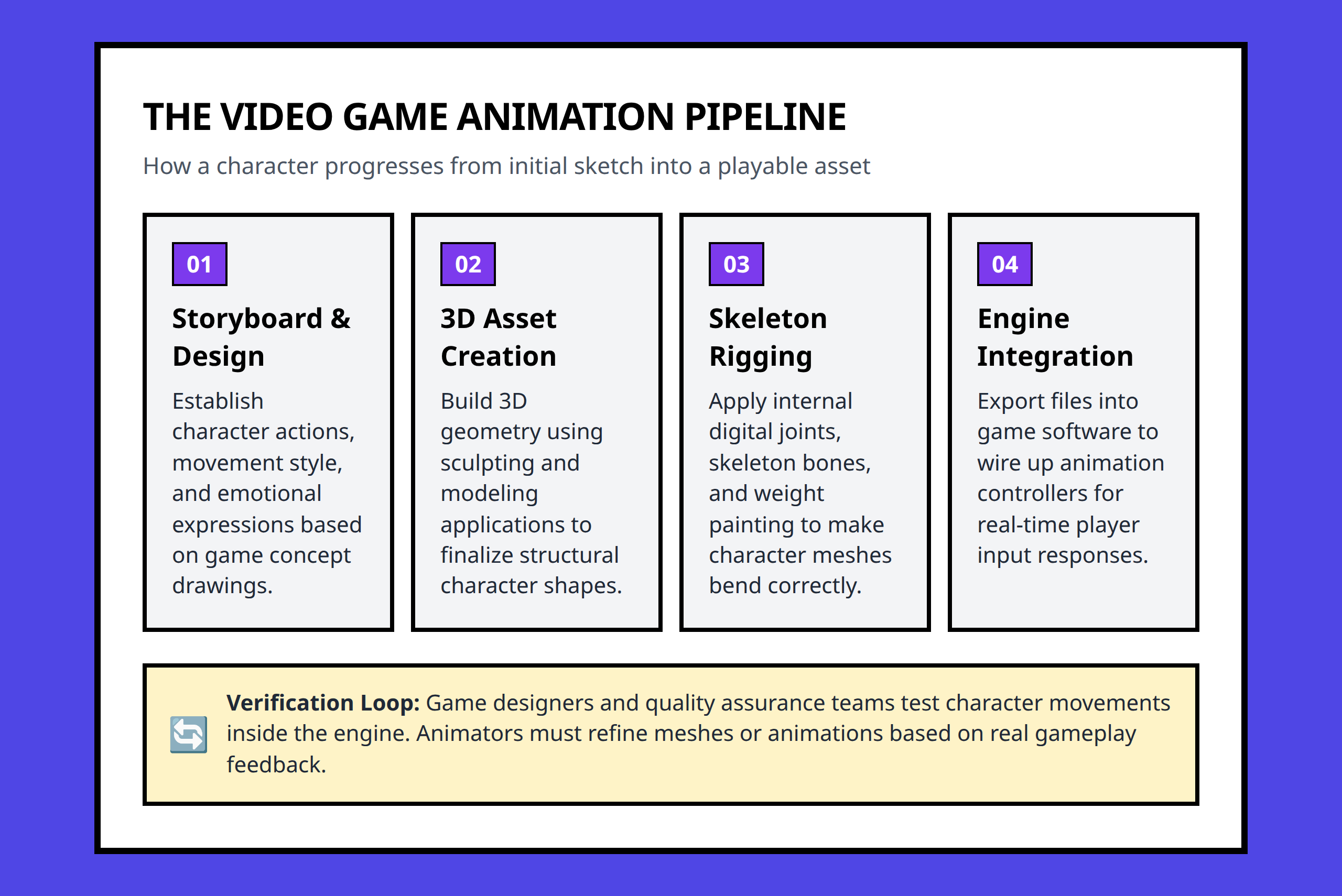
The animation pipeline is the step-by-step process that turns a simple idea into a character that moves inside a game. It begins long before any digital modeling happens and continues until the character is fully integrated into the game engine.
The first stage usually involves storyboarding, where animators and designers sketch how a character or scene should look and behave. This is where the basic personality and movement style are planned.
Next comes the creation of 3D models. Animators use tools such as Autodesk Maya and ZBrush to sculpt detailed digital characters. Maya is often used to build structure and animation, while ZBrush helps refine the visual detail of characters and objects.
Once the model is created, it must be rigged. Rigging means building a digital skeleton inside the character so it can move naturally. Without rigging, a character is just a static model with no motion control.
Finally, the animation is exported into a game engine such as Unity. This is where everything comes together—movement, environment, and gameplay. At this stage, feedback from designers and quality assurance teams often leads to adjustments in character behavior to make the animation feel more natural and responsive.
For example, a character’s walking cycle might be adjusted after testers notice it looks too stiff in fast-paced gameplay. These refinements are a normal part of the production pipeline and show how iterative game development really is.
Tools, Software, and Technical Requirements for Animators
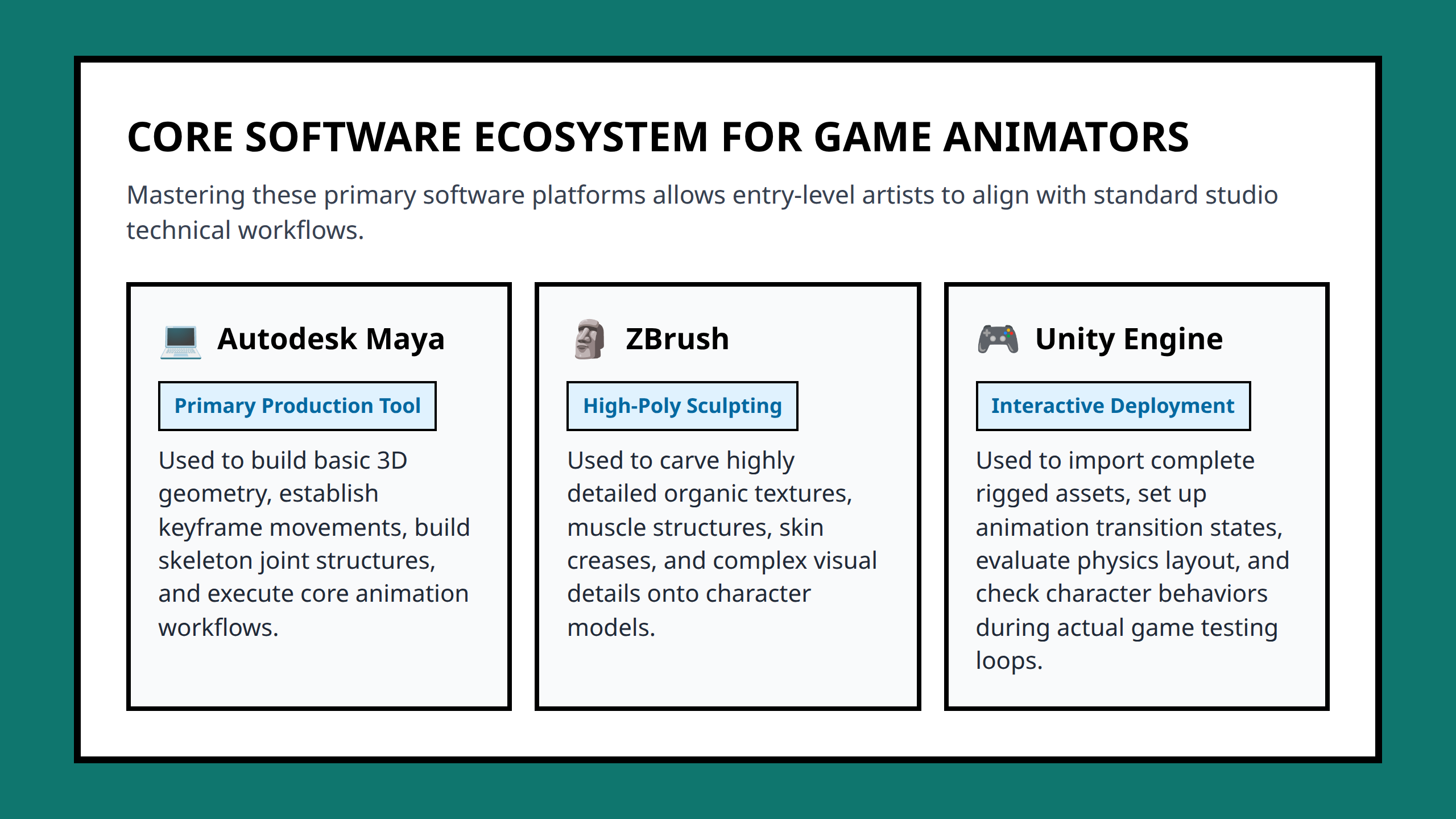
Modern video game animation depends heavily on specialized tools. These tools allow animators to move from early sketches to fully interactive digital characters.
Autodesk Maya is one of the core tools used for modeling and animation. It helps animators build 3D characters, define movement, and control animation timing.
ZBrush is another key tool, mainly used for sculpting highly detailed character models. It allows artists to add texture, depth, and realism that makes characters visually engaging in high-quality games.
Once the animation is created, it must be integrated into a game engine like Unity. This is where animators ensure that movement works properly within the actual game environment.
The process is not linear. Animators frequently go back and forth between tools based on feedback. For instance, after testing, a designer may request smoother movement or a different reaction animation, requiring the animator to return to Maya or ZBrush for adjustments.
This constant refinement makes technical flexibility extremely important. A successful animator is not just an artist—they are also someone who understands how different systems connect inside a game.
Skills, Education, and Career Opportunities in Animation
Starting a career in video game animation does not follow a single strict path, but there are clear expectations in the industry.
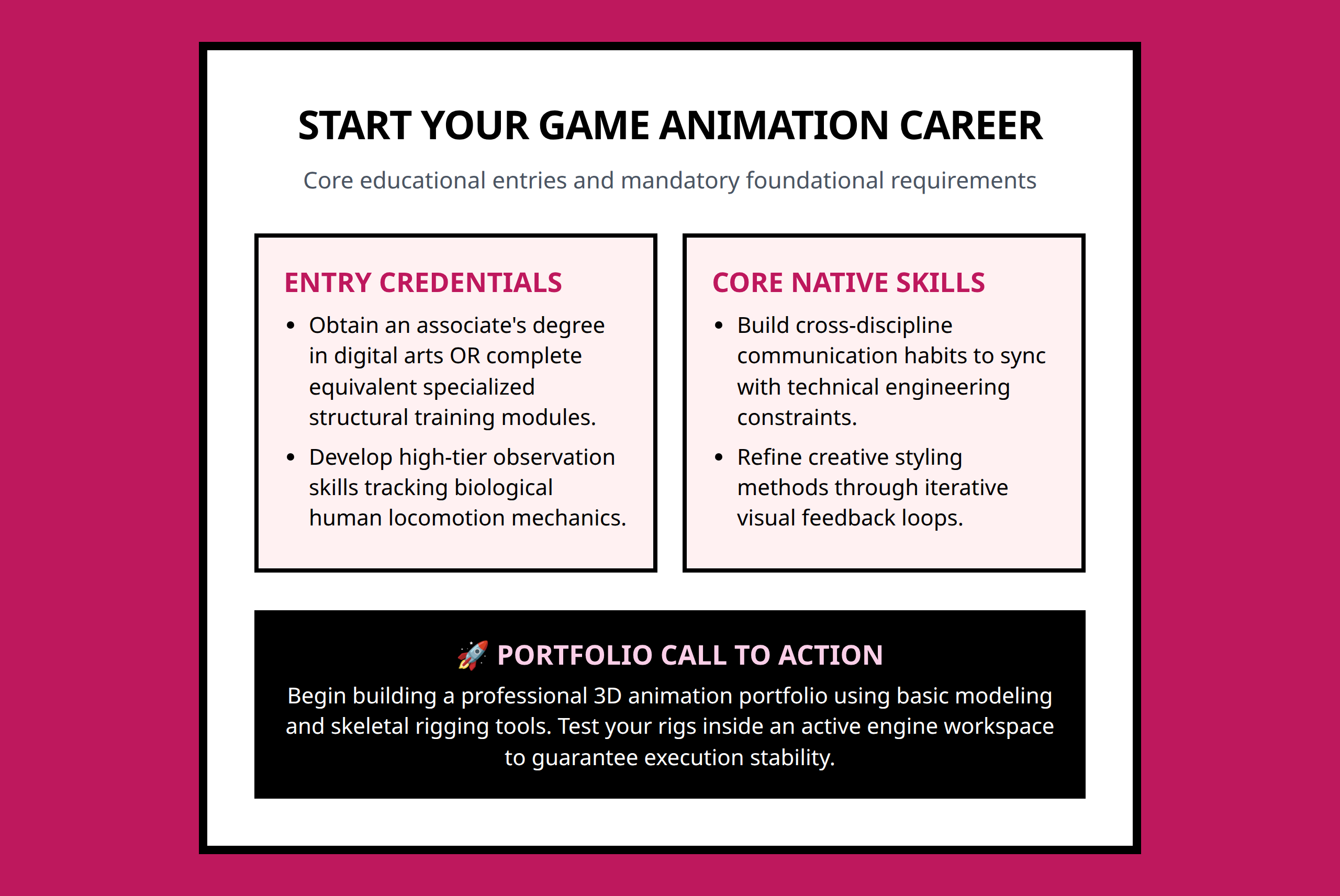
Most employers prefer candidates with an associate’s or bachelor’s degree in animation, computer art, or a related field. However, experience and a strong portfolio can also be enough to enter the field.
Creativity is essential. Animators must be able to imagine how characters move and behave in a believable way. Equally important is collaboration, since animators work closely with designers and programmers throughout production.
Another key skill is observation. Animators study real human movement—how arms swing while walking or how facial expressions change with emotion—and translate those details into digital characters.
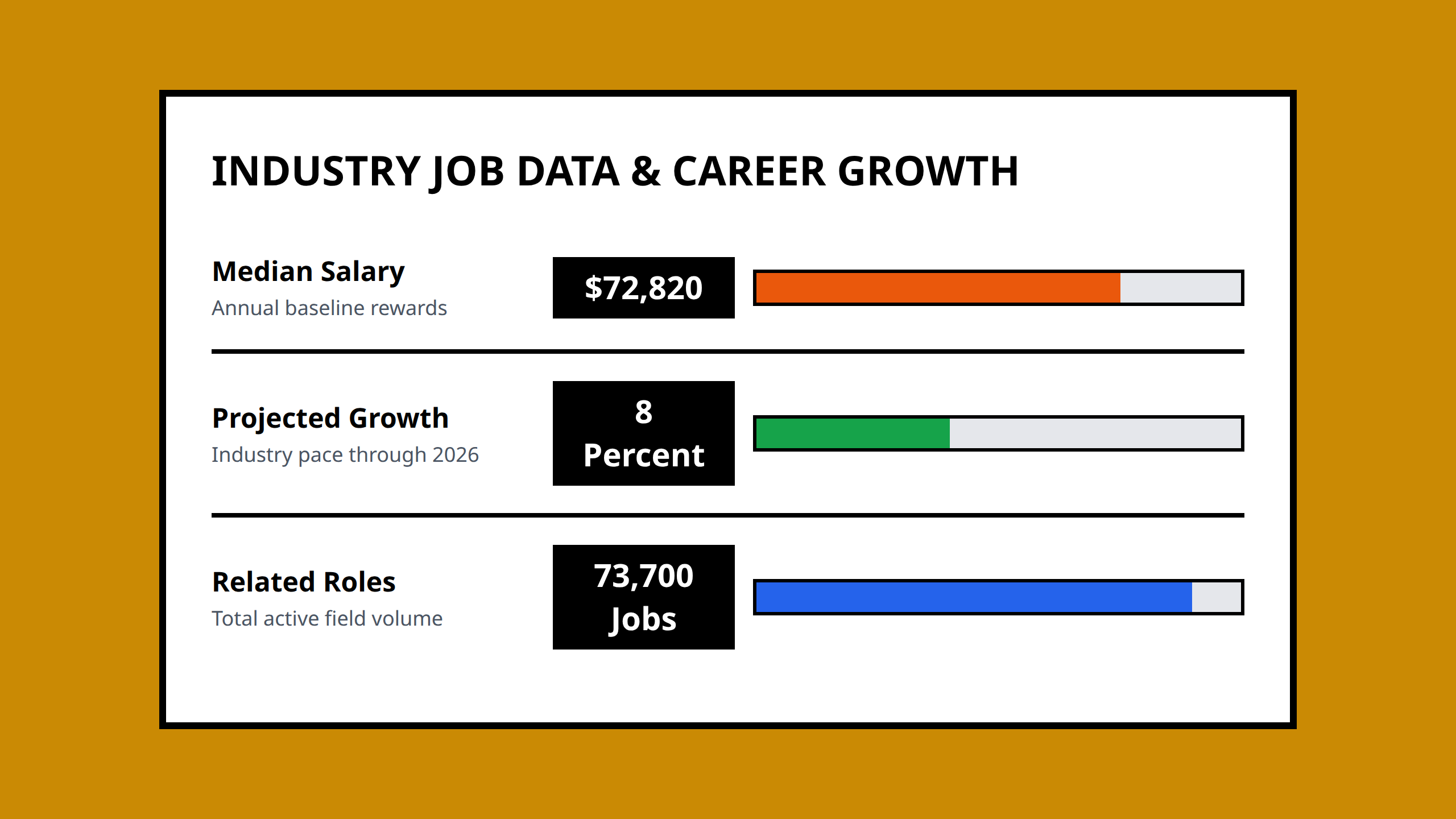
The career outlook is relatively strong. The median salary for multimedia artists and animators was about $72,820 in 2017, showing that the profession is financially competitive compared to many creative fields.
There are also around 73,700 animation-related jobs, and employment is expected to grow by 8 percent through 2026. This growth reflects the increasing demand for more realistic and interactive game experiences.
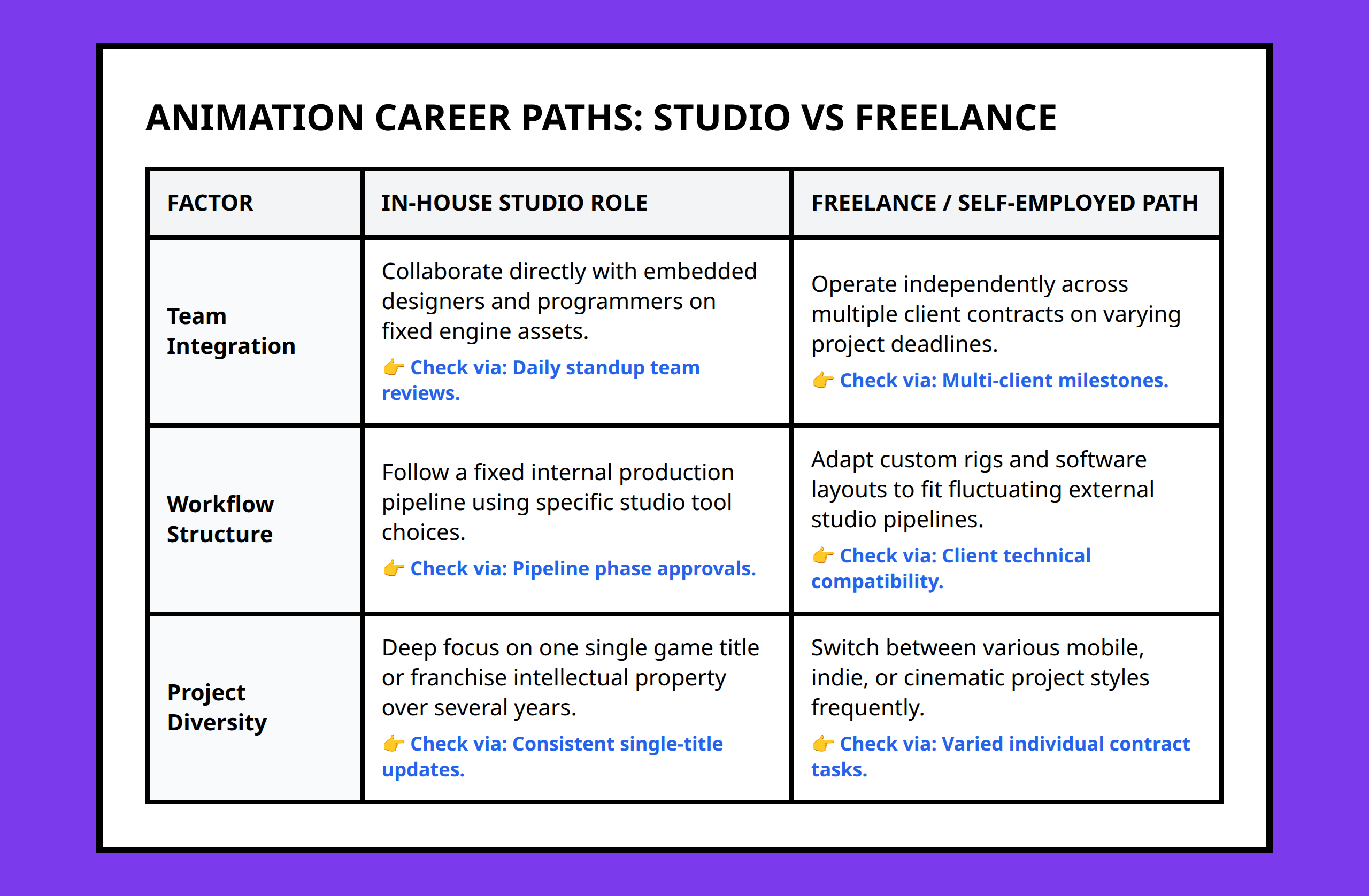
Work structures vary widely. Many animators are self-employed or work on a freelance basis, while others are employed by game studios. Freelancing offers flexibility but also requires constant job searching between projects.
For example, an entry-level animator might start by freelancing on small indie game projects, while building a portfolio that demonstrates their ability to handle rigging, modeling, and animation integration.
Common Mistakes and How to Stand Out as an Animator

One of the biggest mistakes beginners make is focusing only on learning software without building a strong portfolio. In animation, what matters most is what you can show, not just what you know.
Another common issue is working in isolation. Game animation is highly collaborative, and many new animators underestimate how much communication with designers and programmers is required.
A third challenge is unrealistic motion design. Characters that do not reflect real movement often feel unnatural in gameplay. Animators need to study real-life motion closely to avoid this problem.
In professional environments, animators constantly refine their work based on feedback. A character movement might be redesigned multiple times after QA testing reveals issues with timing or visual flow. This iterative process is normal and expected in the industry.
To stand out, beginners should focus on small but complete projects. Even a simple animation showing a character walking, jumping, and interacting with an object can demonstrate a strong understanding of the pipeline.
FAQ
Key Terms Explained
- 3D Animation: The process of creating moving digital characters in a three-dimensional space using specialized software.
- Rigging: Building a digital skeleton inside a 3D model so it can move realistically.
- Game Engine: Software like Unity that runs the game and connects animation, sound, and gameplay systems.
- Autodesk Maya: A professional tool used for creating and animating 3D characters and environments.
- ZBrush: A digital sculpting tool used to add detailed textures and shapes to 3D models.
- Portfolio: A collection of animation work that demonstrates a creator’s skills to potential employers.
Breaking into game animation is less about mastering everything at once and more about showing clear proof that you can complete the full pipeline from sketch to engine-ready animation. The best next step is simple: build a small animation project that includes at least one modeled, rigged, and animated character inside a basic scene.
References:
- https://gamedesignskills.com/game-art/video-game-animator/
- https://www.youtube.com/watch?v=AmHtuYtJqAE
- https://www.youtube.com/watch?v=-vkhkAs1eUU
- https://www.youtube.com/watch?v=V1TVwD1oGFg
- https://www.cgspectrum.com/career-pathways/gameplay-animator
- https://www.voguefashioninstitute.com/from-animation-to-game-designer-your-career-path-guide-for-2026/
- https://www.reddit.com/r/animationcareer/comments/tw0vr0/how_do_i_become_a_3d_video_game_animator_and_is/
- https://jobbank.artsusa.org/career/video-game-animator
- https://www.reddit.com/r/animationcareer/comments/1av4cik/may_i_ask_for_some_guidance_on_how_to_become_a/
- https://www.quora.com/What-are-the-requirements-for-becoming-a-video-game-animator-artist-Is-it-possible-to-get-into-the-industry-without-any-experience
- https://www.quora.com/What-skills-do-I-need-to-become-a-3D-animator-and-work-in-the-the-video-game-industry
- https://www.youtube.com/watch?v=cz4rn_xVX2U
- https://www.bls.gov/ooh/arts-and-design/multimedia-artists-and-animators.htm
- https://elliemotion.com/journal/is-ai-replacing-animators-the-real-answer-from-inside-the-industry
- https://jobbank.artsusa.org/salary/video-game-animator
