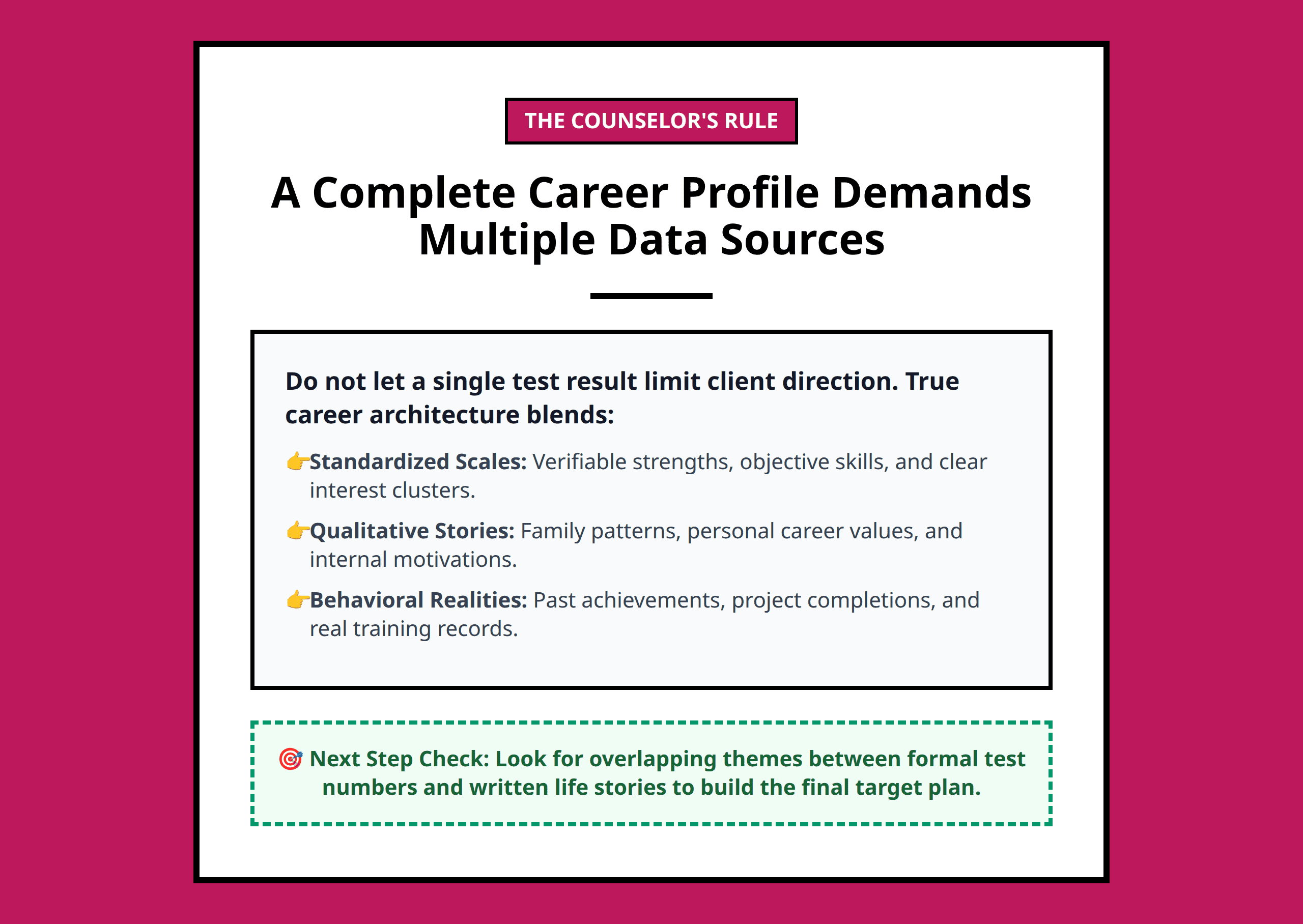
Many assume career assessment ends with personality tests, but effective career guidance examines multiple dimensions—abilities, achievements, beliefs, interests, values, and career maturity—to create a full understanding of each individual.
Career assessment is often misunderstood as simply measuring personality traits or interests. In reality, a thorough evaluation considers eight critical objectives that collectively provide a holistic view of an individual’s career potential and readiness. Each of these dimensions contributes unique insight, allowing counselors and clients to make informed, realistic career decisions.
When I look at assessment in this way, I find that understanding multiple aspects of a person’s capacities and attitudes reveals mismatches that a single test would miss. This approach prevents oversimplification and highlights opportunities for development beyond a preferred occupation.
Takeaways
- Career assessment should extend beyond personality to include abilities, achievements, interests, values, and career maturity.
- Combining standardized tests with self-assessment exercises gives a more complete career profile.
- Each dimension provides specific insight, helping identify strengths, gaps, and developmental needs.
- Holistic assessment enables tailored guidance rather than generic career recommendations.
Clarifying the Purpose of Career Assessment
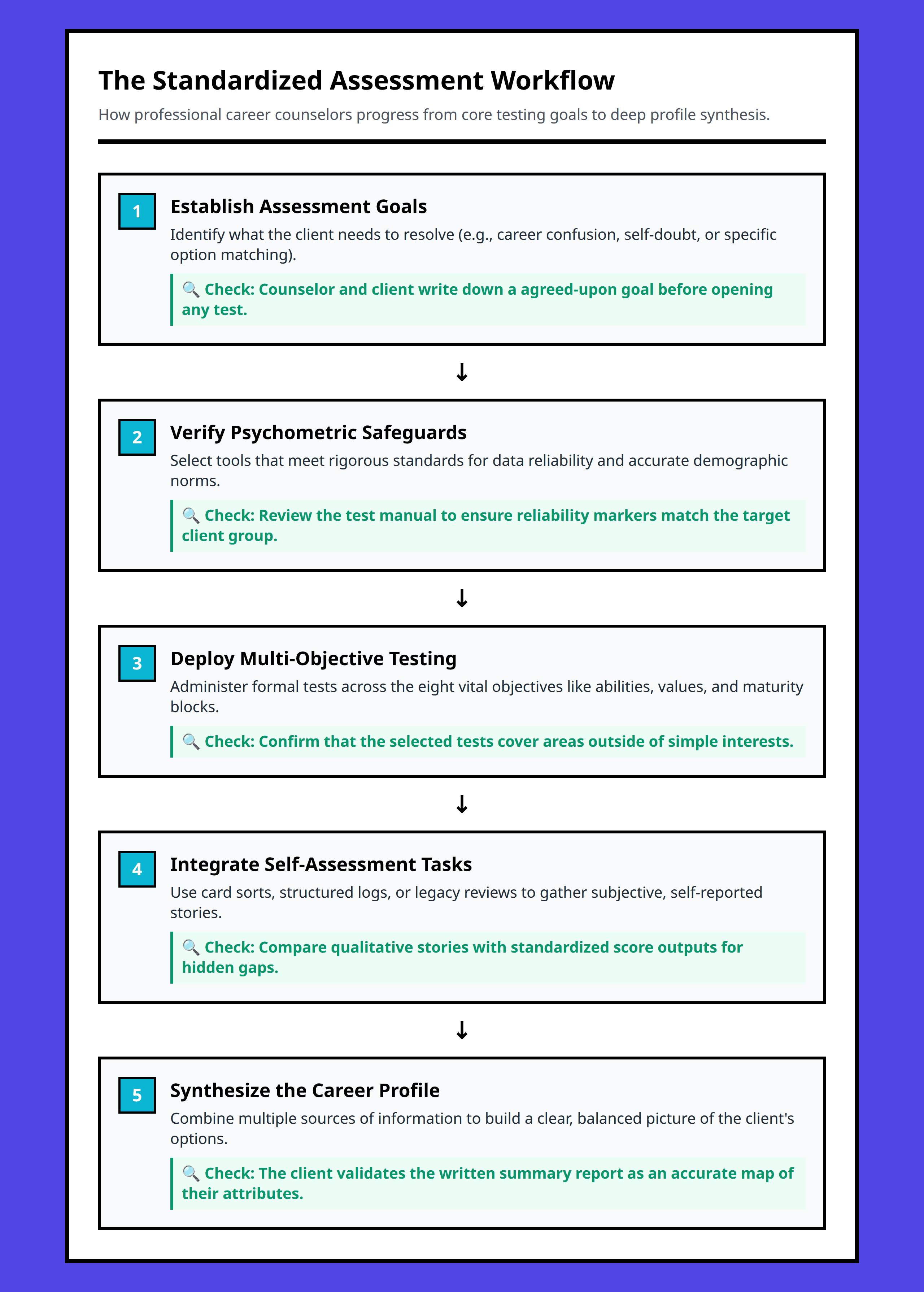
Effective assessment starts by clearly defining objectives. Counselors must ask: Are we exploring interests, measuring skills, identifying values, or gauging career maturity? This clarity guides test selection and self-assessment exercises. For example, evaluating achievement levels may reveal readiness for advanced roles, while interest inventories help align potential career paths with intrinsic motivation.
Eight Dimensions of Comprehensive Assessment
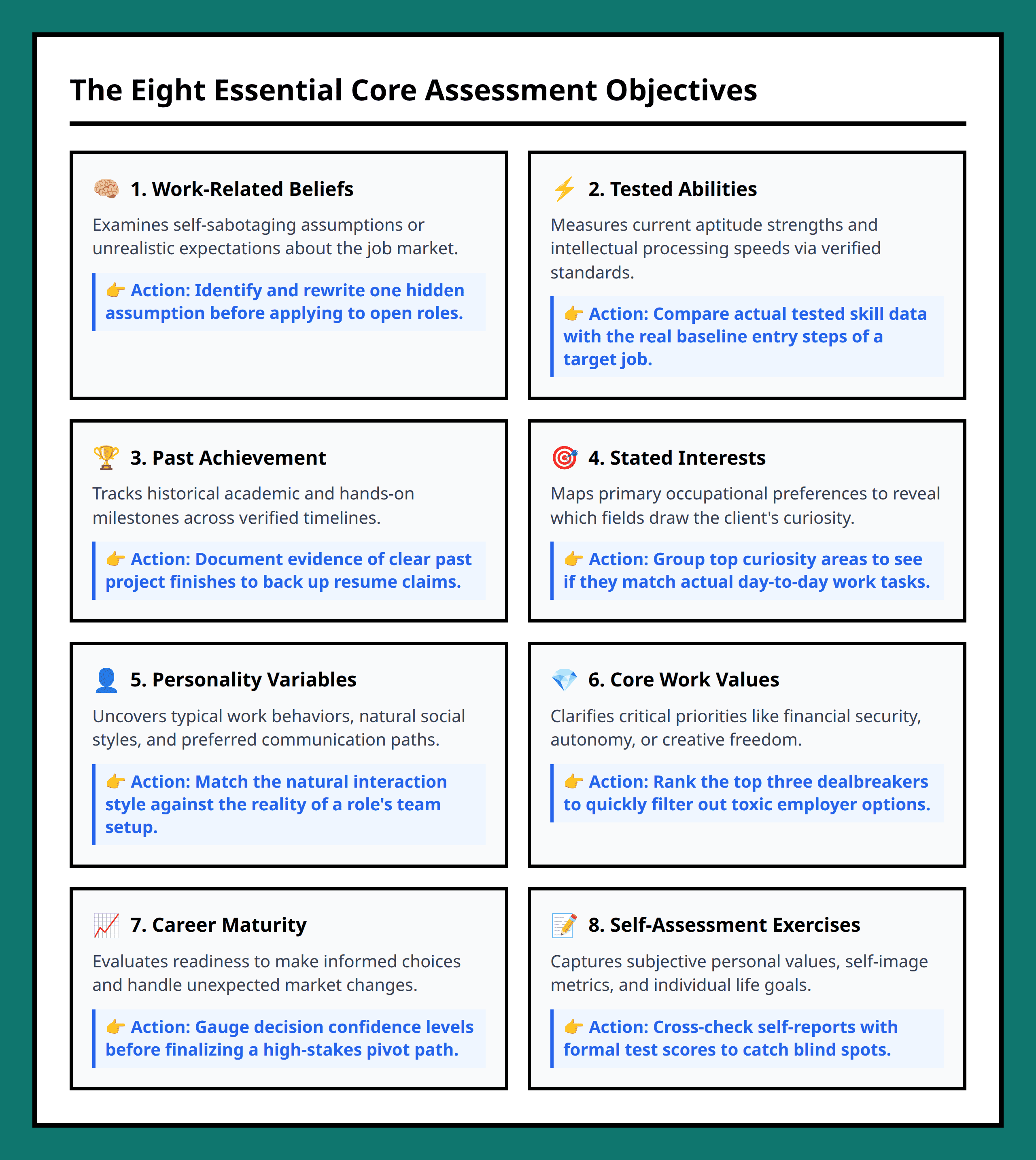
A robust career assessment examines multiple categories. These include:
- Abilities: Measures skills, aptitudes, and natural talents relevant to potential career paths.
- Achievements: Reviews past performance to indicate strengths, potential, and work habits.
- Interests: Determines which activities energize and engage the individual, ensuring alignment with career options.
- Personality Variables: Explores traits such as introversion/extroversion, persistence, and adaptability that impact career success.
- Values: Identifies priorities such as autonomy, collaboration, financial reward, and work-life balance that guide meaningful choices.
- Career Maturity: Assesses readiness to make career decisions, including problem-solving skills, planning, and flexibility.
- Beliefs: Examines attitudes toward work, self-efficacy, and expectations that can influence career behaviors.
- Self-Assessment Exercises: Allows clients to reflect on experiences, preferences, and perceived competencies to integrate insights from tests.
Integrating Multiple Sources for a Fuller Profile

Reliance on a single test can be misleading. I often recommend combining standardized instruments with guided self-assessment exercises. Standardized tests offer reliable psychometric information, while self-assessments capture personal insight, context, and nuance. Together, these sources create a multidimensional profile that informs counseling decisions, training needs, and career exploration strategies.
Practical Applications of Holistic Assessment

Using this comprehensive approach, counselors can identify mismatches between interests and skills, or uncover values conflicts that might prevent job satisfaction. For instance, someone might excel in analytical tasks but feel unfulfilled in roles lacking autonomy. Assessment across multiple dimensions highlights these tensions, allowing for practical interventions such as skill development, career coaching, or gradual exploration of alternative fields.
- Career Maturity: Readiness to make informed career decisions, including planning skills and adaptability.
- Abilities: Skills and aptitudes relevant to occupational tasks and responsibilities.
- Values: Personal priorities and principles that guide career satisfaction and decision-making.
- Self-Assessment Exercises: Structured reflection activities that help individuals evaluate their interests, strengths, and experiences.
- Standardized Tests: Psychometrically validated instruments measuring abilities, personality traits, or interests to provide objective data.
References:
- https://pmc.ncbi.nlm.nih.gov/articles/PMC6480750/
- https://www.edsurge.com/news/2019-11-07-should-career-counselors-use-digital-personality-tests-to-help-students-choose-majors
- https://gradcenter.arizona.edu/news/leveraging-personality-assessments-effective-career-planning
- https://www.sozercizmeci.com.tr/quantitative-assessment-tools/
- https://www.jfcspgh.org/personality-assessments-choosing-a-career-starts-with-self-discovery/
- https://carolineadamscoaching.com/blog/how-to-use-personality-assessments-in-the-workplace
- https://assess.com/personality-assessment/
- https://www.globalcareercounsellor.com/blog/the-role-of-psychometric-assessments-in-career-planning/
- https://www.personalysis.com/articles-personalysis/personality-tests-for-career-path/
- https://www.kuder.com/blog/the-role-of-assessment-in-career-planning/
- https://harbormentalhealth.com/conditions-treated/why-personality-assessment-is-important/
- https://reachlink.com/advice/careers/career-counseling/
