Personal branding is often discussed as a visibility problem, but the deeper issue is usually self-belief. Before other people can recognize your value, you need a clear understanding of who you are, what you offer, and why it matters.
When people hear the phrase “personal brand,” many immediately think about promotion, reputation, or visibility. I see something more fundamental underneath those topics. Every personal brand begins with a person’s view of themselves.
If that foundation is weak, professional visibility becomes difficult to sustain. Recognition may come and go, but confidence remains dependent on what other people think.
Takeaways
- Your personal brand starts with how you define yourself, not how others describe you.
- Seeking constant external validation can weaken confidence and decision-making.
- Self-belief creates consistency in how you present your strengths and capabilities.
- Personal transformation often begins when you stop waiting for permission to recognize your own value.
- Professional opportunities become easier to pursue when your identity is not dependent on outside approval.
You Are the Manager of Your Own Brand
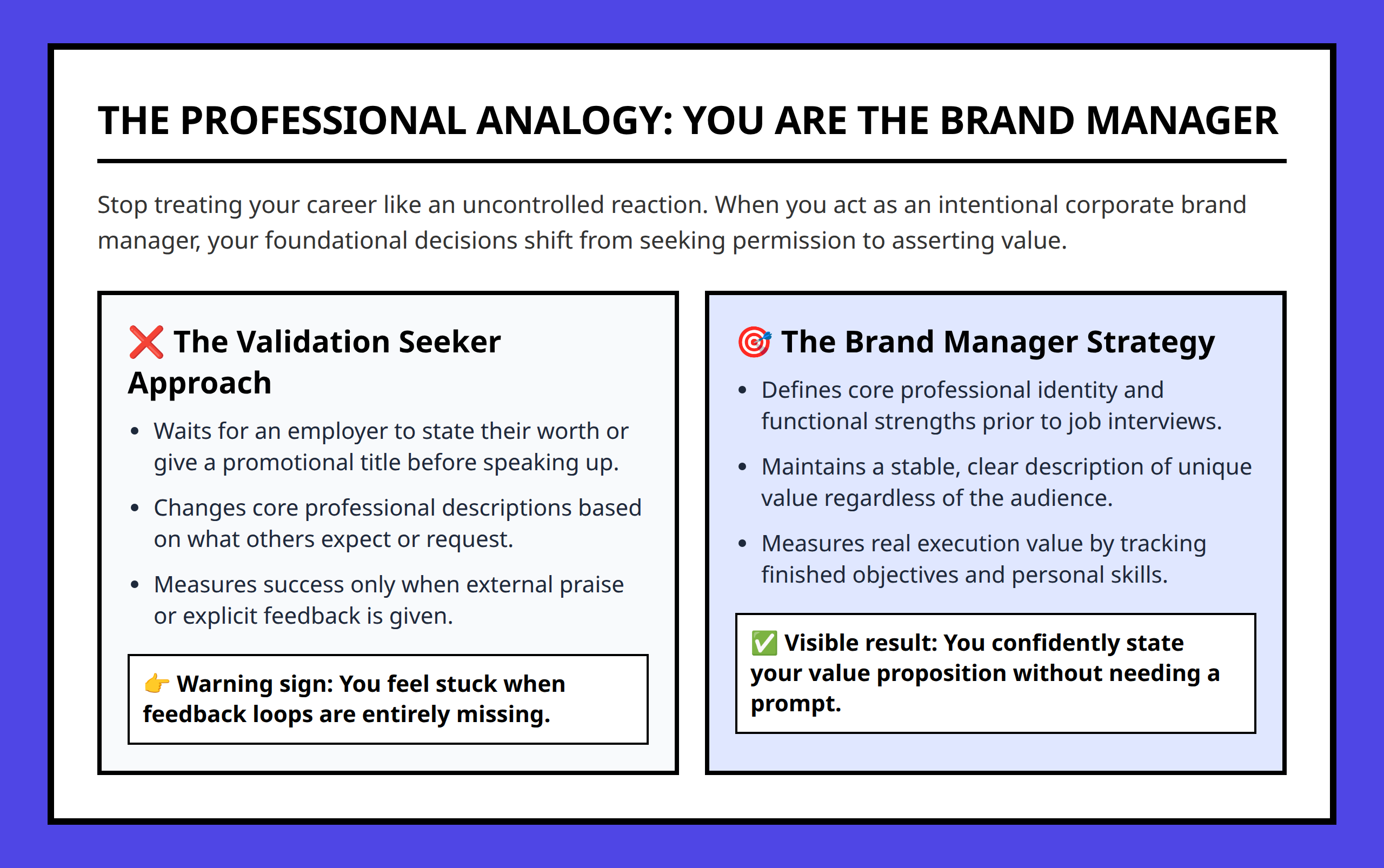
A useful way to think about personal branding is through a branding analogy.
Successful brands understand what they represent. They know their strengths, their purpose, and the value they provide. They do not reinvent themselves every time someone disagrees with them.
I believe the same principle applies to individuals. Whether we realize it or not, each of us manages a personal brand. The difference is that many people never consciously define it.
Without that definition, professional identity becomes reactive. Opinions from managers, colleagues, friends, and even strangers begin to shape self-perception more than personal understanding does.
That creates confusion because outside opinions often change from situation to situation.
The Hidden Cost of Seeking Validation
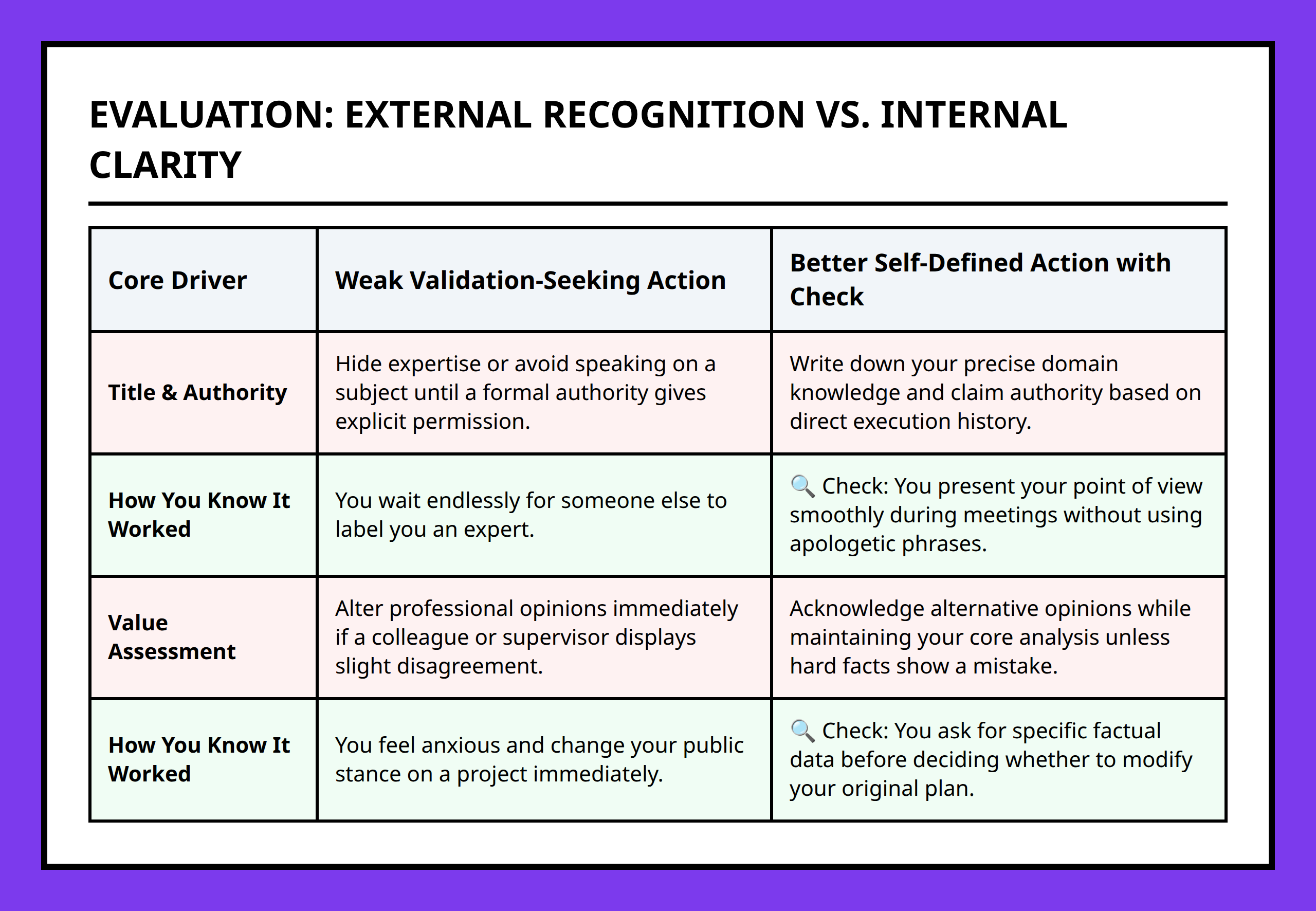
One of the most damaging patterns in professional life is the constant search for validation.
Validation itself is not the problem. Positive feedback can be useful. Recognition can encourage growth. The problem appears when self-worth becomes dependent on receiving it.
Imagine a professional who only feels confident after receiving praise from a manager. On days when recognition arrives, confidence is high. On days when it does not, self-doubt returns.
I would view that situation as a warning sign because confidence is being controlled externally rather than internally.
When self-belief depends on validation, career decisions often become defensive. People avoid opportunities they might fail at, hesitate to share ideas, and wait for permission before acting.
Self-Definition Comes Before Visibility
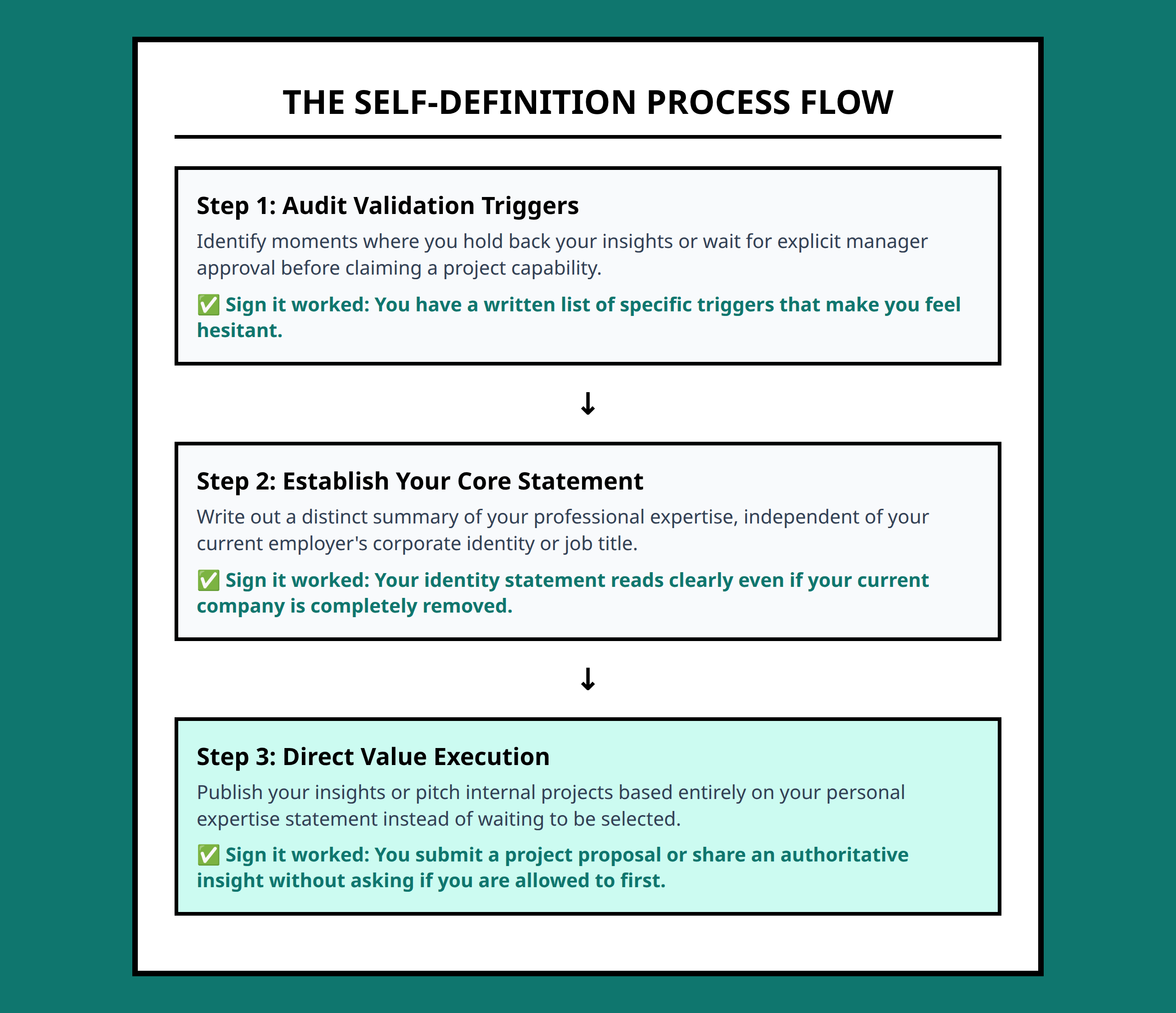
Many professionals focus on becoming more visible before they have defined who they are professionally.
That sequence creates problems.
If someone cannot clearly explain their strengths, values, and contribution, visibility may attract attention without creating meaningful opportunities.
I would start with self-definition instead.
Questions worth exploring include:
- What strengths consistently appear in my work?
- What do I want to be known for professionally?
- What values influence how I work and make decisions?
- What unique combination of skills do I bring?
The answers help create a stable foundation that does not depend entirely on external recognition.
Personal Transformation Often Begins Internally

One reason self-belief matters so much is that professional growth often follows personal transformation.
People rarely pursue opportunities they genuinely believe are beyond their capabilities.
A realistic example might involve someone who consistently avoids leadership opportunities because they do not see themselves as leadership material. The limitation exists before anyone else has evaluated them.
Once their self-perception changes, new behaviors often follow. They contribute more actively, volunteer for responsibility, and become more willing to pursue opportunities that previously felt intimidating.
The transformation starts internally before it becomes visible externally.
How Self-Belief Influences Professional Opportunities

Professional opportunities are often linked to how people communicate their value.
Someone with a strong sense of self-belief tends to speak about their abilities with greater clarity. They are more likely to pursue stretch assignments, share ideas, and engage in conversations about future opportunities.
This does not require arrogance.
In fact, I would separate self-belief from ego. Ego seeks superiority. Self-belief provides stability.
When people understand their strengths and limitations clearly, they become more comfortable pursuing opportunities without needing constant reassurance.
Build the Brand Before Seeking Recognition

Many professionals spend years trying to earn recognition before establishing confidence in their own value.
I would reverse that process.
A strong personal brand grows from self-definition, self-awareness, and self-belief. Recognition may eventually follow, but it becomes a result rather than a requirement.
The practical question I would keep returning to is simple: if external praise disappeared for the next six months, would I still believe in the value I bring?
The answer reveals far more about a personal brand than any professional profile ever could.
- Personal Brand: The professional identity and reputation created through your values, strengths, behaviors, and contributions.
- Self-Belief: Confidence in your abilities and value that does not depend entirely on external approval.
- External Validation: Recognition, praise, or approval received from other people.
- Professional Identity: How you define yourself in terms of strengths, capabilities, values, and career contribution.
- Self-Definition: The process of clearly identifying who you are, what you stand for, and what value you bring.
References:
- https://pmc.ncbi.nlm.nih.gov/articles/PMC6913621/
- https://www.linkedin.com/pulse/how-stop-seeking-validation-start-owning-your-brand-victoria-912kf
- https://academy.smu.edu.sg/insights/personal-branding
- https://www.researchgate.net/publication/381004020_The_Role_of_Personal_Branding_in_Increasing_Generation_Z_Career_Success
- https://online.hbs.edu/blog/post/personal-branding-at-work
- https://www.forbes.com/sites/jodiecook/2025/05/07/master-the-psychology-of-building-an-unforgettable-personal-brand/
- https://medium.com/@rockyjunaifer/building-a-personal-brand-a-journey-of-growth-and-purpose-4043d99ba5dc
- https://slateteams.com/blog/personal-branding
- https://www.linkedin.com/pulse/four-ps-building-personal-brand-purpose-presence-alan-shoebridge-nhbtc
- https://executive.berkeley.edu/thought-leadership/blog/creating-purpose-driven-personal-brand
- https://www.ama.org/marketing-news/the-three-cs-of-personal-branding-communication-competencies-and-character/
- https://www.astoncarter.com/en/insights/articles/personal-branding-importance-how-to-build-it
